Patient health data generates billions in pharmaceutical value. Patients see none of it — yet.
NowRaising DataValue Health's pre-seed · reading James Joyce's Ulysses and Wolf Hall · Lisbon
I build things in communities that conventional marketing can't reach. Fifteen years of that work produced Eat Your Kimchi — 1.1M subscribers, 620M views, built through years of genuine attention. Along the way: brand work for Kia, Airbnb, Hilton, YouTube, and Coke. Now that community is the foundation for DataValue Health.
I also built ReadingRate, a reading analytics app for serious readers.
As seen in The Verge· Wall Street Journal· Business Insider· Nikkei Asia· Al Jazeera
Cited in The Birth of Korean Cool· Planet Canada· K-Pop Now· A Geek in Korea
Co-founded with Martin Schneider, MD/PhD (Stanford). Investor demo live; HealthKit companion app on TestFlight. Raising pre-seed.
An interactive atlas of Northrop Frye's theory of literature: the wheel of mythoi, modes, symbols, and myths, with full-text citations. readingrate.com/anatomy-of-criticism ↗
In progress.
Reading journal and marginalia sync into your vault. See the graph below ↓
Your library becomes a tool Claude can query. Paying subscribers. mcp.readingrate.com ↗
Plus home-screen widgets and a share extension.
Difficulty scores, pace tracking, marginalia. The app behind the library below. Get the app ↗
Literary essays on Substack. simonsbookclub.substack.com ↗
Grew to 1.1M subscribers and 620M views over a decade of daily publishing. youtube.com/@eatyourkimchi ↗
Everything from 2025 on: designed, built, and shipped by one person, with Claude Code.
★★★★★Early 20s
★★★★★Early 20s
★★★★★Early 20s
★★★★★Early 20s
★★★★★Early 20s
★★★★★Early 20s
★★★★★Early 20s
★★★★★Early 20s
★★★★★Early 20s
Early 20s
★★★★★Early 20s
Early 20s
★★★★★Early 20s
★★★★★Early 20s
★★★★★Early 20s
★★★★★Early 20s
Early 20s
★★★★★Early 20s
Early 20s
★★★★★Early 20s
★★★★★Early 20s
★★★★★Early 20s
★★★★★Early 20s
★★★★★Early 20s
★★★★★Early 20s
★★★★★Early 20s
★★★★★Early 20s
★★★★★Early 20s
★★★★★Feb 16 – Feb 18, 2025
★★★★★Feb 26 – Feb 28, 2025
★★★★★Nov 22, 2024 – Apr 3, 2025
★★★★★Aug 16 – Aug 21, 2025
★★★★★Aug 31 – Sep 2, 2025
★★★★★Aug 30 – Sep 4, 2025
★★★★★Sep 11 – Sep 22, 2025
★★★★★Sep 10 – Sep 23, 2025
Sep 29 – Oct 2, 2025
★★★★★Oct 2 – Oct 3, 2025
Oct 4 – Oct 7, 2025
★★★★★Oct 9 – Oct 14, 2025
Oct 14 – Oct 23, 2025
★★★★★Oct 23 – Oct 29, 2025
Oct 30 – Nov 9, 2025
Nov 9 – Nov 11, 2025
★★★★★Nov 12 – Nov 16, 2025
Nov 17 – Nov 20, 2025
NotesDrive Your Plow Over the Bones of the DeadMarginaliaNov 26, 2025The past isn't something we can retreat to. It's lost to us. All that we have is here with us now. How can we make the best of it?
I love that the narrator is very embodied, and aware of how the changes of her body affect her experience with the world. And with that, the kind
Nov 27, 2025The more time I spend with the narrator, the more I empathize with her, the more I see a beauty in her worldview, even if I don't agree with it. I'm able to feel tenderness towards someone with a vastly different system than my own, with no urge to correct her, but just to witnes
Nov 28, 2025We don't see the world as it is. We see it as we are.
The more we're aware of this, the better we can interface with others, and connect with people even if we don't share their values and worldview. Get off your high horse. A little bit of humility solves for a lot of interpe
★★★★★Nov 20 – Nov 27, 2025
NotesThe Magic MountainMarginaliaNov 29, 2025If you want to do something above average, to exceed expectations and succeed, you'll be much better equipped to do so if you're in good health. Take care of your body, first and foremost if you want to have a fighting chance at success. Neglecting your health is weighing the di
Nov 30, 2025We've seen in Interstellar how the experience of time changes with gravity. I think it's the same with our experience of time here on earth. The more grave our circumstances, the faster time moves for us. Time moves faster for those who are struggling. Once we're settled, and in
Dec 1, 2025There are some slightly Buddhist elements to this book, both with ideas of time and presence, as well as with being awakened. When we are not awakened, we suffer from resistance, from anti-social behaviour, from disconnection, from not wanting to be disturbed. But when we are awa
Dec 2, 2025Settembrini is my favorite character in the book so far. Even if I don't agree with his grandiose Modernist values, I do find myself challenged by them. This oriental soft abandonment that seeks this spot reminds me of all that I heard while in my Buddhist meditation part of life
Dec 3, 2025Hans went from being a smitten pushover for Settembrini's ideas - beautifully worded though they may be - to being able to challenge the grandiose narcissism of the Modernist experiment. Those that push forward for the progress of humanity often have only part of humanity in mind
Dec 4, 2025I'm reading Settembrini and Joachim as Modernist narcissists, ashamed to take care of themselves, and itching to save the world. Hans isn't as conceited, and decides to take care of his neighbours, rather than whinging about how the world should be fixed.
Hans shows them both
Dec 5, 2025I love this new character, Naphta! What a great counterbalance to Settembrini's rhetorical tyranny. His views are so challenging, and hard to dismiss. I know public schools are often promoting the importance of individuality and personality, but once we leave them those lessons a
Dec 6, 2025I'm comparing the sanatorium to a Buddhist temple; some go for a week long retreat, while others decide to stay forever and work towards perfect enlightenment, and obsess over every aspect of their subjective experience.
Though I know of other Buddhist teachers who say "after th
Dec 7, 2025I'm noticing many mentions lately - in content I see about those who have been excellent at their craft, career, and sport - of the necessity of fanaticism, anti-social behaviour, lunacy, and pathological risk tolerance, all for the benefit of humanity. We can't build anything,
Dec 8, 2025Time doesn't fly like an arrow, but spins like a wheel. We often think we're progressing in our lives, developing, healing and growing, and advancing towards something, but most often we're spinning our wheels, doing the same thing, following our routines and repeating our patter
Dec 10, 2025Nobody cares about your philosophy if you're not attractive. Peeperkorn shows no depth in public, and can barely complete a sentence even, but he's thrillingly charming and charismatic, embodied and emboldening. People pay attention to him more than any of the brilliant ideas sha
Dec 11, 2025We're near the end of the book, and we've totally lost our sense of time now, and have no clue how long Hans has been lost. Now, he's spending his nights (how many?) lost in music, and projecting his discomfort with the Western world's constant need of performing, of contributing
Dec 12, 2025Naphta is at his most brutal here, completely dismantling Settembrini's Enlightenment goals, and he totally nailed it. 100 years after this book was published, skepticism and cynicism and irony and doubt and overall Postmodern distrust of grand narratives and dismantling of struc
Quotes“The word science was the expression of the silliest realism which should not blush to take at their face value the more than dubious reflections of objects in the human intellect to pass them current and to shape out of them the sorriest, most spiritless dogma ever imposed upon humanity. Was not the idea of a material world existing by and for itself the most laughable of all self-contradictions? By the modern natural sciences, as dogma rested upon the metaphysical postulate that time, space, and causality—the forms of cognition in which all phenomena are enacted—are actual conditions existing independently of our knowledge of them. This monistic position was an insult to the spirit. Space, time, and causality— in monistic language, evolution; Here was a central dogma of a free-thinking, atheistical, bastard religion, by virtue of which one thought to supersede the first book of Moses, and oppose a pure light of knowledge to a stultifying fable - as though Hekel had been present at the creation! Empiricism! The universal ether - based on exact knowledge, of course?”
“The young faun was joyous on his summer meadow. "No, justify thyself," was here. "No, challenge." "No, priestly court-martial upon one who strayed away and was forgotten of honour." Forgetfulness held sway. A blessed hush. The innocence of those places where time is not. Slackness with the best conscience in the world. The very apotheosis of rebuff to the Western World, and that the world's insensate ardour for the deed.”
“What was this, then, that was in the air? A rising temper, acute irritability, a nameless rancor, a universal tendency to envenomed exchange of words, to outbursts of rage - yes, even to fisticuffs. Bitter disputes, bouts of uncontrolled shrieking, by pairs and by groups, or of daily occurrence; and the significant thing was that the bystanders, instead of being disgusted with the participants, or seeking to come between them, actually sympathize with the one side or the other to the extent of being themselves involved in the quarrel.”
“Your humanity is today nothing but a tail end, a stale classical survival, a spiritual ennui; it is yawning its head off while the new revolution, our revolution, my dear sir, is coming on at a pace to give it its quietest period. We, when we sow the seeds of doubt deeper than the most up-to-date and modish freethought has ever dreamed of doing, we will know what we are about. Only out of radical skepticism, out of moral chaos, can the absolute spring, the anointed terror of which a time has need.”
“I repeat, that therein lies our duty, our sacred duty to feel. Feeling, you understand, is the masculine force that rouses life. Life slumbers. It needs to be roused, to be awakened to a drunken marriage with divine feeling. For feeling, young man, is godlike. Man is godlike, and that he feels. He has the feeling of God. God created him in order to feel through him. Man is nothing but the organ through which God consummates his marriage with an intoxicated life. If man fails in feeling, it is blasphemy; it is a surrender of his masculinity, a cosmic catastrophe, an irreconcilable horror.”
“Put Herr Naphta in one corner of the room, and let him deliver discourse on Gregory the Great and The City of God — it would be highly worth listening to — and put Mynheer Peeperkorn in the other, with this extraordinary mouth and the wrinkles on his forehead, and let him not say a word except "By all means — settled, ladies and gentlemen!" You will see everybody gather around Mynheer Peeperkorn, and Herr Naphta will be sitting there alone with his cleverness and his City of God, though he may be uttering such penetrating wisdom that it pierces through marrow and cucumber.”
“The sort of training and education required by the people in their struggle against a crumbling bourgeois kingdom they had long known how to find elsewhere, that in these governmental establishments for compulsory training; One day all the world would realize that our system, which had developed out of the cloister schools of the Middle Ages, was a ridiculous bureaucracy and an anachronism. Nobody in the world any longer owes his education to his schooling, and that a free and public instruction through lectures, exhibitions, cinematographs, and so forth was vastly to be preferred to any school course.”
“And in the center is the position of Homo Dei, between recklessness and reason, as the state is between mystic community and windy individualism.”
“You do not love the word, or you have it not, or you are chary with it to unfriendliness. The articulate world does not know where it is with you. My friend, that is perilous. Speech is civilization itself. The word, even the most contradictious word, preserves contact - it is silence which isolates.”
“You went in a circle, gave yourself endless trouble under the delusion that you were accomplishing something; and all of time you are simply describing some great, silly arc that would turn back to where it had its beginning. Like the riddling year itself. You wandered about without getting home.”
“Disease was very human, indeed. For to be man was to be ailing; man was essentially ailing. His state of unhealthiness was what made him man. There were those who wanted to make him "healthy." To make him "go back to nature," when the truth was he never had been "natural." All the propaganda carried on today by the prophets of nature, the experiments and regeneration, the uncooked food, fresh air cure, sunbathing, and so on, the whole Rousseau and paraphernalia had as its goal nothing but the dehumanization, the animalizing of man.”
“He had become inwardly aware he would find everything down below wrong and out of place, and that the feeling would last a considerable time before readjustment set in. It would seem to him unnatural to go to his office instead of taking a prescribed walk after breakfast and thereafter lying ritually wrapped horizontal in the balcony. The dread perception had been the immediate ground of his flight.”
“Men consciously and voluntarily descended into disease and madness, in search of knowledge which, acquired by fanaticism, would lead back to health, after the possession and use of it had ceased to be conditioned by that heroic and abnormal act of sacrifice.”
“The tranquility when achieved consisted of a complete atrophy of the personality. A state of insensibility in which the individual became a lifeless tool. It was a veritable graveyard peace.”
“The difference between life and religion went back to that between time and eternity. Only in time was there progress. In eternity, there was none. Nor any politics or eloquence either.”
“The pity the well-person felt for the sick, a pity that amounted to awe, because the well-person could not imagine how he himself could possibly bear such suffering, was very greatly exaggerated. The sick person had no real right to it. It was, in fact, the result of an error in thinking—a sort of hallucination—in that the well-man attributed to the sick his own emotional equipment.”
“'Oh, so he demanded that the unhappy victim of social maladjustment be convicted of his own sinfulness, and tread in full conviction of the path to the scaffold?' 'Quite. The evildoer is filled with his guilt as with himself. For he is as he is, and can and will not be otherwise - and therein lies his guilt.'”
★★★★★Nov 28 – Dec 11, 2025
NotesThe EmpusiumMarginaliaDec 13, 2025I'm reading this immediately after The Magic Mountain, where many characters are convinced that they know what the capital T truth is about, and speak about the way the world should be, the way nature intended, without any knowledge of the limits of their beliefs, and without nam
Dec 14, 2025What a beautiful metaphor! And at such a tender moment, after his bath with the woman who cared for him, while his father was cold and brutal. Really felt a wow at reading this line.
And the message is one we've heard before: time heals all wounds, though, as we know, many wound
Dec 15, 2025Believing in a dualistic nature of mind and body is a dangerous position. I prefer a epiphenomenal approach, in not thinking of a distinction between the two. There's only the body, and thoughts are emerging from the movement of the body. The kinder you are to the body, the bette
Dec 16, 2025This last talk with Semperweiss was my favorite part of the book. It's metamodern to the core. We're too lazy to be nuanced, granular, and patient. We don't want complexity. We demand simplicity, a choice between two options, a good guy and a bad guy, and when we do so, we don't
Quotes“A sense of inferiority affects one's whole life, especially once thinking, because we lack confidence we think of a very stable rigid system to keep us upright to simplify what seems to us to be an unnecessary complication, and the greatest simplification is black and white. Thinking based on simple antitheses, the mind establishes for itself a set of acute opposites, black and white, day and night, up and down, men and women, and they determine our entire perception. There's nothing in the middle. Seen like that, the world is far simpler. It's easy to navigate between these poles. It's easy to establish rules of conduct and it's particularly easy to judge others often reserving the luxury of obscurity for oneself. This kind of thinking protects us from any uncertainty, crash, bang, and it's all clear, like this or like that, there is no third option. This protects us from reality, which is built up of a multitude of very subtle shades If anyone thinks the world is a set of stark opposites he is sick. I know what I'm saying. It's a powerful disfunction”
“I postulate acknowledging the rationale for this world that's in between either/or. It would be something like a gray zone between the one and the other.”
“Our entire culture has grown out of a feeling of inferiority, out of all those unfulfilled ambitions. And yet it is the other way around. That which is weak in us gives us strength. This constant effort to compensate for weakness governs our entire lives. Demosthenes had a stammer and that was exactly why he became the greatest speaker of all time, not in spite of it, but because of it.”
“Every society has two pillars of activity: hypocrisy and conformism. Hypocrisy always cites high-flown ideas that build a community. One should believe in them and show that one believes in them, but at base nobody takes those ideas entirely seriously. They are for others, and should be in force for them. Whereas conformism is a mode for moving about within this imaginary world that tells us to ignore everything that sticks out and doesn't fit. And forgetfulness serves this purpose.”
“I am a doctor, and I believe in science. Science favors simple statements that can describe the vast majority of the world's complexities like this or like that, if A then B and not C.”
“One can easily imagine creatures known as Flatlanders who live in a place called Flatland, as if on a sheet of paper, two-dimensional, where there is no depth. Can you see it? Please activate your imagination. They have no concept of us three-dimensional creatures.”
“Only very small or very large things are immortal. Atoms are immortal, and galaxies are immortal. That's the whole mystery. The range of death is very specific, like a radio wave.”
“As if the world were built of plywood and were now delaminating before their eyes, as if all contours were blurring, revealing fluid passages between things, the same process affected their ideas. And so the discussions became less and less factual because the speakers had suddenly lost their sense of certainty, and every word that had been reliable so far now acquired contexts, entailed illusions, or flickered with remote associations.”
“Our senses impose on us a particular kind of knowledge of the world and they are limited. Aren't they? But what if the world around us is entirely different than our imperfect senses tried to convince us? Have you ever thought of that? All I know is that in reality it seems impossible to coordinate the viewing points.”
“Each of us is a potential lunatic, young man. Fantasizing is the norm. Each of us sits astride the border of our own inner world and the outer one, balancing dangerously. It's a very uncomfortable position, and not many succeed in maintaining their equilibrium.”
“Uniforms always make me laugh. All those epaulets and medals, that whole system of symbols to remind us what heroic deeds their wearer performed or how important he was. All those ranks and hierarchies, and then the discomfort of the uniform, the contradiction of clothing so stiff and so uncomfortable. The dirtier the war, the grander it is. All those accessories, right down to the buttons. National emblems on buttons - can you imagine? If you shift your viewpoint a short way, just a touch, from the absurd towards common sense, a uniform as an absolutely astonishing disguise. What exactly do these men in uniforms do? They kill. What do they take pride in? Violence.”
“Don't you have the feeling, that we get everything in a muddle here? That we can't remember what we said the day before, and what we ended on? Which side we took, who was our adversary and who our ally? We've been here for months, said Thilo, 'One sinks into a strange state of mind here.'”
“Wojnicz found the rest-cure hours deadly boring until he learned to make use of them as time for himself, conducive to thinking. He had noted that when one participates intensively in life, one has no time for thinking or examining everything precisely, if only in one's imagination.”
“He preferred to belong to this world, which did not yet know him and in whose eyes he still had time to define himself. He would rather take the risk that one day this world too would disappoint him, and he would have to run away again, escape to yet another, more distant location to avoid falling into the arms of that familiar, hopeless state in which one was simply bothered to oneself into others. By this point, he had just about adopted the idea that his illness had come upon him at a very good moment in his young life, giving him a chance to reformulate himself, and that he should actually be happy to have ended up here.”
“The freshly laundered flannel pajamas were stiff and unpleasant, but Mieczyś knew that next morning after the first night, they would be the same as ever, nice and soft. The passage of time smoothed out the creases and roughness, making the world a friendlier place.”
“If Wojnicz had been familiar with the practice of self-reflection and introspection, he might certainly have noticed how thoughts arise and what they are like - they are wisps of sensations carried by time, like gossamer, moved by the wind, trails of tiny reactions that arrange themselves into random sensations. Sequences eager for meaning. But their nature is volatile and impermanent, they appear and disappear, leaving behind an impression that something really did happen and that we took part in it. And that we are stuck inside a stable, uncertain period that it exists.”
“He did not believe that one day Poland would push through to independence. Why on earth should that happen? Only a large country was strong. Only a diverse country could survive difficult times. Were it to come into being, Poland was bound to be a weak country, and the scars from the partitions would make life a misery for many years to come.”
“The aim of the cure is for the patient to endeavour to combat his own illness. By strengthening the organism, one increases its immunity. By this means, the development of the illness is first halted, then gradually the complaint recedes and good health returns. Through regular exercise, the affected lungs learn to perform correctly. The fresh mountain air stimulates the functions of the heart. The result of a cure at Goebbelsdorf can be rated amongst the most favourable. Almost 75% of patients return to good health.”
“He added that it was a sort of projection of the spectator's interstate, and that we should wonder whether what we are seeing might look entirely different in reality. Wojnicz replied that as a child he had been bothered by the question of whether, for example, everyone saw the color green similarly, or was "green" just an agreed term for something that each person might perceive in their own way. If so, then our inner representations of the world might be dramatically different. Only language and social norms would be keeping some kind of order. 'But in fact colours are particular wavelengths, objective measures,' he concluded. 'Except that they can act on the human eye in all sorts of ways. How do you see green?' asked Thilo. Wojnicz could not answer. 'Green like a leaf' - that was all that occurred to him. He could only talk about it through comparison, through analogy with something else.”
“He could even have acquiesced to his naivete, which proved to be a good quality that always led to unexpected places, down the alleyways of life, where one might experience a sudden or even a violent transformation. Where one might change and become unrecognizable, and yet still remain one's real self inside. Clearly, there is both an outer and an inner existence. The 'internal' one was dressed in the 'external' one, and from then on was perceived by the world in that form. But why might the 'internal' one feel so uncomfortable inside this 'external' one?”
“Teachers were the most chimeric species in existence - nothing pleased them, and they were always finding something to complain about.”
“All these matters absorbed his mind, drawing the world inside, into the large, chaotic space that each of us carries within, like an invisible piece of luggage that we drag after us all our lives, without knowing why. Our true self.”
“Men usually have wives who, without always being visible, support the family business from the kitchen or the laundry.”
“Some are vaguely aware that they have stopped developing, do you know? They feel unwell in this confinement, for them it is stagnation; they are drawn into the past, as if trying to find something stimulating their, haha. That is when a man starts to be interested in his own family, to draw genealogical trees and spend Sunday afternoons examining photographs, as if his miserable existence were to spill into a greater, family form.”
“He regarded the fashion for nation-states as transitory, and believed it would end badly: 'The artificial division of people according to such feeble categories as a place where they were born do not suit the complexity of the question of identité.'”
“The words of Dr. Sokolowski came back to him too from the days when he had first treated Wojnicz and started to tackle his apathy - that life should be made appetizing. Yes, appetizing, that was a better word than gemutlich, thought Wojnicz, for it could refer not only to space but everything else as well - to someone's voice, to a way of speaking, of sitting in an armchair, or tying a scarf around one's neck, to the way cakes were arranged on a plate.”
“Do you know what is the most common mistake people make when they are in danger? Each one thinks their life is unique, and that death doesn't affect them.”
“The Truth with a capital T always relies on the threat of cutting off anything that extends beyond its boundaries. No fringes, not at all. Behind the Truth hides violence. Do not demand the truth. It's a waste of your young time.”
★★★★★Dec 12 – Dec 15, 2025
NotesHouse of Day, House of NightMarginaliaDec 17, 2025While this is another way of sharing the idea that "wherever you go, there you are," it also adds the idea that if you're traveling, you're not participating in the culture or community there, but just focused on yourself and your individual experience and preferences.
Dec 18, 2025Language structures our thoughts, and the words we choose to use impact how we experience a situation. I'm happy to see passages like this challenge the way gendered language impacts how we perceive and treat others, especially the elderly. In "Drive Your Plow Over the Bones of
Dec 19, 2025A great way to question our binary thinking is even to question how unnatural white is, how it doesn't appear in nature. There's always some blurring, some blending. Nothing is entirely pure white, or pure dark. Extremes don't exist anywhere.
Dec 20, 2025I just thought about how language only grows, but doesn't shrink. We always make new words, but how often do words die? We don't use them as much, but once they're made, they always exist, and always will point to something, even if many forget what they point to
Dec 21, 2025This seems so obvious: we always want new things instead of old things. Why is that? Is it because we're afraid of poor health and disease, both of which happen with older things more often than newer? The newer things are, the less damage they have, the less likely they'll have
Quotes“For some reason people have developed a liking for only one sort of transformation. They are fond of increase and development, but not decrease and disintegration. They prefer ripening to decay. They like things to be younger and younger, more and more juicy, fresh and unripe; they like things that are not yet fully moulded, still a bit angular, driven by a powerful spring of potential, what might still happen, always the moment before, never after. They like young women, new houses with fresh plaster, new books smelling of printer's ink, and new cars and their astonishing shapes, which are really just variations on a familiar theme for those in the know. They like the latest technology, the gleam of freshly polished metal, newly bought objects brought home in fancy pack-aging, the rustle of smooth cellophane, the sweet tension of virgin string. They like brand-new banknotes - even if they don't fit in their wallets - clean plastic surfaces that won't go yellow for years, polished tabletops without the slightest trace of a mark, empty spaces yet to be cultivated, smooth cheeks, the expression 'anything can happen' (who bothers to add the words 'in vain?), green peas forced from their pods, astrakhan fur, flowers in bud, innocent puppies, baby goats, newly cut planks that hay-en't yet forgotten the shape of the tree, and bright green grass oblivious to corn spikes. People only like what's new and has never existed before. The new! The new!”
“No mushroom book separates them into beautiful and ugly, fragrant and stinking, nice to touch and nasty, those that induce sin and those that absolve it. People see what they want to see, and in the end they get what they want - clear but false divisions. Meanwhile, in the world of mushrooms, nothing is certain.”
“It's not that I want to be old - it's not a particular age I'm longing for, but a certain way of life. One that's reserved for old age, perhaps. It involves not taking action, but if you do, doing it slowly, as if it's not the result of the action that matters, but the actual movement, the rhythm and the melody of the movement. It means watching the ebb and flow of time, but no longer having the courage to go with a tide, or against it. It means ignoring time, as if it were just a naive advertisement for something else that's truly desirable, and doing nothing, just counting the strokes of the living room clock, the pit-a-pat of pigeons' feet on the windowsill, and the beats of your heart to - and then immediately forgetting them all. It means not longing or thirsting for anything - at most, it might mean looking forward to a holiday, after all that's what holidays are for.”
“At first, I would get lost in it all, I'd be terrified, desperately searching for constancy. Finally, I'd realize that constancy really does exist, but way beyond my reach. While I'm like a stream, like the river in Nova Ruda that keeps changing color, the only thing I can be sure of is that I'm flowing through a point in space and time, and I'm nothing more than the sum of the properties of that place in that time.”
“Words and things do form a symbiotic relationship, like mushrooms and birch trees. Words grow on things and only then are they ripe in meaning, not ready to be spoken aloud until they become part of the landscape. Only then can you play with them like a ripe apple, sniff them and taste them, lick their surface before snapping them in half and inspecting their reclusive, succulent insides. Unless the whole language were to die, such words will always exist because they're able to put their other meanings to use and become part of the world.”
“As I was looking at her and smiling, I realize that any form of whiteness is odds with the natural order of things, and doesn't exist in nature. Even snow isn't white; it is a gray, yellow, shining gold, it can be blue as a sky or gray as graphite.”
“At once I realized the whole truth about the world - that it is time that prevents the light from getting through to us. Time keeps us apart from God, and as long as we are within time, we are imprisoned, doomed to fall prey to darkness. Only death releases us from its shackles, but at that point, we have nothing left to say about life.”
“That's how our eyes are constructed - they see nothing but a lifeless extract of a larger, living hole, and whatever they see they pin down and kill. When I look at something, I believe that what I'm seeing is fixed, but that's a false image of the world. The world is constantly in motion, always vibrating. It has no zero point that can be committed to memory and understood. Our eyes take pictures that are nothing but images, mere outlines. The landscape is the greatest illusion of all, because there is nothing constant about it. You remember a landscape as if it were a picture. Your memory creates postcard images, but doesn't really comprehend the world at all. That's why landscape is so affected by the mood of the person looking at it. In a landscape, a person sees his own inner, transitory moments. Wherever he looks, he sees nothing but himself. The end.”
“He dreams of writing his own book, but in other people's, he's always discovered his own ideas, already written.”
“People call this "imperfection" because, for some reason, they are sure that perfection exists.”
“Whenever people say everything, always, never, every, they're really only talking about themselves – in the real world such generality don't exist. She advised me to be careful, because if someone starts a sentence with the word always, it means they're out of touch with reality and are talking about themselves.”
“I've been thinking about words that are unjust, probably because they arose from an unevenly and sloppily divided world. What is the female equivalent of the word manliness? Womanliness? But the former implies strength and fortitude, while the latter implies weakness. How can women be ascribed this virtue without erasing their gender? The same is true of the words virility and effeminacy - the former implies vigour and energy, while the latter implies affectation and feebleness. In Polish tradition, old men are stereotypically wise and experienced, while old women are typified as bitter and gossipy.”
“He heard on the radio that an astronomer had discovered a new planet, and ever since he had worried about it endlessly - that somewhere far out in space the planet was revolving, small and icy, sure to be angular, too. If it wasn't there before, but now was, that meant even things that should always stay the same did, in fact, change. What's the good of a world that keeps changing like that? How can one go on calmly living in it?”
“I don't understand her now, whenever I think of her. But why should I? What would I gain from uncovering the motives for her behavior, or the sources of all her tales? What would I gain from her life story, if indeed she has a life story to speak of. Maybe there are people with no life story, with no past or future, who are different, always in the present.”
“One night without sleep, and people's thoughts would start to smolder, the letters in the world's newspapers would get muddled up, spoken sentences would make no sense, and people would try to push them back into their mouths.”
“When you're traveling, you have to take care of yourself in order to get by. You have to keep an eye on yourself and your place in the world, which means concentrating on yourself, thinking about yourself, and looking after yourself. So when you're traveling, all you really encounter is yourself, as if that were the whole point of it. When you're at home, you simply are. You don't have to struggle with anything or achieve anything. You don't have to worry about railway connections and timetables, you don't need to experience any thrills or disappointments. You can put yourself to one side - and that's when you see the most.”
“Because in a monastery, there is not much difference between the past and the future, because not much changes over time in an everyday life, except perhaps the colors of the season. The monks live in a constant presence, a period of time that in the outside world would seem just a fleeting moment has no beginning and no end. And if it weren't for the wisdom of the human body, which never loses sight of its final goal, life in the monastery would have been immortal.”
“We have ended up as human beings through forgetfulness, through a lack of attention. In reality, we are creatures drawn into a vast, cosmic battle that has probably been going on since time immemorial, and that, for all we know, may never end. All we see of it are glimmers, in blood-red moons, in fires and gales, in frozen leaves that fall in October, in the panicky flight of a butterfly, in the irregular pulse of time that can lengthen a night into infinity or come to a violent stop each day at noon.”
Dec 16 – Dec 20, 2025
NotesThe Books of JacobMarginaliaDec 22, 2025This is the second time Tokarczuk talked about us seeing the color green differently. She mentioned it in the Empusium as well. It's an idea I talk about with people too. We can't be sure we're seeing the same thing. There's no one reality, no Capital T truth, no pure objectivity
Dec 23, 2025I spent today thinking about scarcity vs abundance mindset, and this line stuck out to me from yesterday. Does avoidance of pain govern me more than pursuit of pleasure? I definitely think I'm more pleasure driven than I am pain averse. I enjoy challenging myself. While I notice
Dec 24, 2025Tokarczuk again focusing on the language of extremes and how they fail us. Every bit of darkness has light in it, and vice versa. Nothing is clearly one or the other. Everything is always blurry
Dec 25, 2025Nothing much I could read during Christmas Eve, as I had a lot to do.
Dec 26, 2025I'm finally getting the feeling of the book. The spirit of Yente is floating through time and space and putting the fragments of the story together. Much like Tokarczuk's regularly fragmented style.
Dec 27, 2025Non-binary language is key to Tokarczuk's writing. I'm surprised to see it set in the 1600s, where I don't imagine nuance being held very well.
Dec 28, 2025A while ago I was thinking about how Northern Europeans vs Southern Europeans interacted with North America differently, which resulted in different cultures of connection and individuality. This seems to echo that.
Dec 31, 2025I'm actually having a really hard time getting into this book. I'm 33% of the way through, and I'm just not captivated. This seems more like historical fiction and documenting what happened, rather than a compelling, well-thought-out story. It's also not the style of writing that
Jan 1, 2026Things are starting to finally make more sense to me with this book. The idea of needing to descend into sin to be the Messiah is the unlock for me, and I was missing that point before. Plus, Jacob isn’t necessarily orchestrating this all himself, as a singular egoic figure, but
Jan 2, 2026I'm feeling bad for Jacob in a way. He's set up in Turkey and things look pretty good for him, and his maniac friends want to pull him back to Poland, where he had a pretty bad time.
Jan 3, 2026Tokarczuk has mentioned a few times that Capital T truth isn't worth pursuing.
Jan 4, 2026I’m starting to get a picture of the bigger drama here, and the strategies all sides are using to achieve their goals. It’s almost feeling Game of Thrones ish.
Jan 5, 2026Jail didn't seem so bad back then as it does now. Being alone in a castle vs locked in what looks like school with all of the bullies from school, in super tight quarters, seems so much worse than what Jacob's going through. I'm getting Count of Monte Cristo memories as well, a
Jan 6, 2026Our thoughts about the dead and their wants are projections of our own. We assume some similarity with our wants and theirs, some connection between who we were in life and who we will be when we die.
Jan 7, 2026It seems like the idea that descent into sin is the path to salvation can justify all kinds of improprieties. Thankfully Jacob was just horny and not violent, and so he was more obsessed with sexual sins than murderous ones.
Jan 8, 2026I'm kind of amazed all that Jacob went through. And this is historical fiction? Man, what a wild life. He's now out of jail and move to another country, and he has people thronging to him AGAIN somehow. Just wild
Jan 11, 2026This was the most confusing book I ever read for names. I didn't know who most people were most of the time. So m any name changes, and such complicated names.
Conversations with ClaudeMar 18, 2026Developed an original reading of The Stranger in which Meursault is not a native Frenchman but an indigenous Algerian whose family has adopted a French name — possibly Merzouk (مرزوق), meaning "the one blessed by God" — under colonial assimilation pressure. This reading reframes Meursault's famous affective flatness as Islamic sabr (patient composure under suffering) rather than existentialist detachment, and his fury at the chaplain as resistance to a foreign symbolic system rather than atheist philosophy. The reading connects to Lisa Feldman Barrett's argument in How Emotions Are Made — illustrated by the Tsarnaev trial — that courtrooms impose one culture's emotional vocabulary as universal, and to Tokarczuk's Books of Jacob, which shows communities performing dominant cultural identities while maintaining different interior lives.
• Meursault's name may derive from Merzouk (مرزوق), a common Maghrebi Arabic name meaning 'the one blessed by God' — plausible given the colonial Algerian practice of adopting French names for assimilation.
• Lisa Feldman Barrett's constructed emotion framework, illustrated by the Tsarnaev trial, maps directly onto Meursault's trial: both men were convicted partly for failing to produce the emotional performance their respective courtrooms expected.
• Islamic sabr — active composure under suffering, not the absence of feeling — reframes Meursault's behaviour at his mother's funeral as virtue rather than pathology.
• Meursault's rage at the chaplain, climaxing in 'he was on the others' side' (p.120 Vintage edition), reads as resistance to colonial symbolic imposition rather than existentialist atheism — the fury breaks from something long accumulated.
• Textual evidence supporting the reading: Marie says 'I'm browner than you' after a beach day; Meursault describes Parisians as having 'washed-out, white faces'; on arrest he is placed with Arab prisoners who receive him; he instantly reads Arab identity from a name alone.
• This reading deepens the colonial critique beyond the standard Said/O'Brien binary of colonizer vs. colonized — it locates the violence in whose emotional grammar gets to count as human.
Quotes“The idea that all of that arises out of his own mind is both terrifying and alluring in equal measure. What if we are imagining all of it? What if each of us sees everything differently? Does everyone see the color green the same, or is green maybe just a name we use as if it were a paint to coat completely distinct experiences in order to communicate, when in reality every one of us is viewing something different? Is there not some way this can be verified? And what would happen if we really were to open our eyes, if we were to see by some miracle the reality that surrounds us? What might that be like?”
“Now, in the semi-darkness and throng of guests, all names seem somehow fluid, interchangeable, secondary. After all, no mortal holds on to his name for very long.”
“Asher Rubin thinks that most people are truly idiots, and that it is human stupidity that is ultimately responsible for introducing sadness into the world. It isn't a sin or a trait with which human beings are born, but a false view of the world, a mistaken evaluation of what is seen by our eyes. Which is why people perceive everything in isolation: each object separate from the rest. Real wisdom lies in linking everything together, that's when the true shape of all of it emerges.”
“I took in that strange knowledge Kama kept in secret, Kama that prayer and meditation alone cannot save the world, much though it may have been attempted.”
“I had the overwhelming impression that everything around me was false, that it was artificial, as if the world had been painted by some skilled artist on canvases hung up all around. Or, to put it another way; as if everything around me had been made up, and by some miracle had taken the shape of reality.”
“Every place has two characters - every place is double. What is sublime is also fallen. What is clement is at the time, is at the same time base. In the deepest darkness lies a spark of the most powerful light, and vice versa: where omnipresent charity where omnipresent clarity reigns, a pit of darkness lurks inside the seat of light.”
“The further north you go, the more people concentrate on themselves, and in some sort of Northern madness (no doubt due to lack of sun) they ascribe to themselves too much. They make themselves responsible for their actions. ”
“To be foreign is to be free. To have a great expanse stretch out before you - the desert, the steppe. To have the shape of the moon behind you like a cradle, the deafening symphony of the cicadas, the air's fragrance of melon peel, the rustle of the scarab beetle when, come evening, the sky turns red, and it ventures out onto the sand to hunt. To have your own his-tory, not for everyone, just your own history written in the tracks you leave behind. To feel like a guest everywhere you go, occupying homes just for a while, not bothering about the garden, enjoying the wine without forming any attachment to the vineyard. Not to understand the language, and therefore to register gestures and faces better, the expressions in people's eyes, the emotions that appear on faces like the shadows of clouds. To learn a foreign language from scratch, a little bit in every place, comparing words and finding orders of similarity. This state of foreignness must be carefully guarded, for it gives enormous power.”
“What I liked most about it was that it was not important there whether we were mother or father, daughter or son, woman or man. There was no great difference between us. We were all just forms that took on light whenever it so much as glistened over matter.”
“But he just laughed at us and mocked us, saying we were still seeing everything in that old, worst way: insisting on ladders wherever we went, one person standing above another, forcing the lower one to do all kinds of things. This one more important, that one less. Whereas here in this village near Craiova, they had arranged things in a different way. Everyone was equal.”
“If a person wanted to claim a fortress, he would never be able to get there by just talking about it - for words are fleeting. He'd have to go in with an army. That's what we have to do: walk, not talk. Did our grandfathers not have enough discussion, did they not strain their eyes over the scriptures? What good did any of it do them? What purpose did it serve? It's better to see than to speak. We have no use for know-it-alls here?”
“Nahman’s stories are not always to be believed - even less so when he writes them down. He has a propensity for exaggeration. He detects signs in everything; in everything, he seeks and finds connections.”
“The selfsame thing comes out very differently in the hands of two different people. Those who are left and those who leave will always draw different conclusions. Likewise the person who possesses and the person possessed, the person who is sated and the one who is hungry - and the wealthy daughter of a nobleman dreams of a little pug from Paris, while the poor daughter of a peasant dreams of a goose to have for meat and feathers.”
“Truth for truth's sake is not worth looking into. The truth in itself is always complicated. What we want to know is what truth we could use, and how.”
“If you want to rid the world of someone, it does not take fire and sword, nor any type of violence. You just have to pass over that person in silence and never call him by name. In this way, he will gradually recede into oblivion. If another person insists on enquiring into the matter, you must threaten him with herem.”
“But because the Trinity must ceaselessly work on behalf of the equilibrium it disturbs, it is shaky, and it isn't until you get to Four that you attain the highest holiness and perfection that restores divine proportions. It is not in vain that God's name in • Hebrew is composed of four letters, and that all the elements of the world were established so by Him (Yeruchim once told me that even animals can count to four!), and everything that is important in the world must be quadruple.”
“This limitless between has its strange critical point - the double period. This is the first experience of the thinking man - when he notices the abyss that appears between himself and the rest of the world. This is the painful two, the fundamental crack in the created world that gives rise to contradictions and all sorts of dualisms. This and that. You and me. Left and right. ”
“People want easy explanations, and so we must simplify everything for their sake, and since it cannot be written down, it all becomes rather stupid... This or that, black, white - it's like digging with a hoe. Simple is dangerous.”
“The worst part is making the decision in the first movement; once it's underway, everything becomes quite natural. It's an act of faith, jumping headfirst into the water without any regard for what's at the bottom. When you come back to the surface, you are new. Or it's like a person who has gone to distant countries and returned, and suddenly he sees that everything that used to seem natural and obvious to him is in fact merely local and bizarre. What seemed foreign and bizarre he now understands, so that it feels like it belongs to him.”
“As the days pass, it becomes clear to all Ivanie that the comet is a hole drilled into the heavenly firmament, through which the divine light may pass in order to reach us, and through which God is now checking on the world.”
“the world itself demands to be narrated, and only then does it truly exist, only then can it flourish fully. But also that by telling the story of the world, we are changing the world.”
“It is in Frank's looks that give him power. Asher knows such people, many magnates have it, the nobly born - that inexplicable self-confidence, founded in nothing, or perhaps in the existence of some internal center of gravity that makes a person feel like a king in any situation. ”
“The dead would like to be talked about; they are hungry, and that is their food. What they want from us is our attention. ”
“Over time, moments occur that are very similar to one another. The threads of time have their knots and tangles, and every so often there is a symmetry, every once in a while something repeats, as if her frames and motifs were controlling them, a troubling thing to notice. Such order tends to overburden the mind, which cannot know how to respond. Chaos has always seemed more familiar and safe, like the disarray in your own drawer. ”
“When the Emperor puts some direct question to Jacob, he feels as if he's coming up against the iron sides of the man's will. He senses the incredibly powerful boundaries of his self. These are people from everywhere and nowhere. The future of humanity. ”
“The truth is like a gnarled tree, made up of many layers that are twisted all around each other, some layers holding others inside them, and sometimes being held. The truth is something that can be expressed in many takes, for it is like that garden the sage has entered,which each of them saw something else.”
★★★★★Dec 21, 2025 – Jan 11, 2026
NotesFlightsMarginaliaJan 12, 2026I’m so in love with this book, even more now the second time I read it. All of these aphorisms, the narrator’s movement and travel obsession, her love letter to airports and tiny bottles, to breaking free from boundaries and nationalities, even for organs to grow beyond their int
Jan 13, 2026Writing, like any skill, first you master the rules, and then you can break them, and see them as arbitrary, and you can form new movements. Mastery comes not from reason, not from power, but from acknowledging the system behind it, aware of the neither here nor there.
Jan 14, 2026Verheyen suffered over his leg, and spend his life taking it apart in order to better understand it, but that caused him no relief. So too with trauma psychology, reliving the holy grail of childhood wounds, obsessing over them in a language only you speak, which does nothing to
Jan 15, 2026I'm reading the "Flights" section, and it's still the most powerful part of the book, without a doubt, for me. What the shrouded woman said was so poetic and prophetic, so booming, so befitting Cormac McCarthy. I would have thought she's just a rambling lunatic, but she's so wel
Jan 18, 2026The understanding that there's only physiology and theology, and the repetition of that phrase, with not much explanation about it afterwards. It's a bomb of an idea, and we are left to piece it together afterwards
Physiology and theology being the only subjects you need to und
Quotes“A guy in the cafeteria of this one museum said that nothing gives him such great satisfaction as being in the presence of an original artwork. He also insisted that the more copies there are in the world, the greater the power of the original becomes, a power sometimes approaching the great might of a holy relic. For what is singular is significant, what with the threat of destruction hanging over it as it does. Confirmation of these words came in the form of a nearby cluster of tourists who, with fervent focus, stood worshipping a painting by Leonardo da Vinci. Just occasionally, when one of them couldn't take it anymore, there came the clearly audible click of a camera, sounding like an 'amen' spoken in a new, digital language.”
“Sedentary peoples, farmers, prefer the pleasures of circular time, in which every object an event must return to its own beginning, curl back up into an embryo and repeat the process of maturation and death. But nomads and merchants, as I set off on journeys, had to think up a different type of time for themselves, one that would better respond to the needs of their travels. That time is linear time, more practical because it was able to measure progress towards a goaler destination, rises in percentages. Every moment is unique; no moment can never be repeated. This idea favours risk taking, living life to the fullest, seizing the day. And yet the innovation is a profoundly better ones: when change overtime is irreversible, loss in morning become daily things. This is why you’ll never hear them other words like futile or empty”
“But if there's one thing I know now, it's that anyone looking for order ought to steer clear of psychology altogether. Go for physiology or theology instead, where at least you'll have solid backing - either in matter or in spirit - instead of psychology's slippery terrain. The psyche is quite a tenuous object of study.”
“Here we were taught that the world could be described, and even explained, by means of simple answers to intelligent questions. That in its essence the world was inert and dead, governed by fairly simple laws that needed to be explained and made public – if possible with the aid of diagrams. We were required to do experiments. To formulate hypotheses. To verify. We were inducted into the mysteries of statistics, taught to believe that equipped with such a tool we would be able to perfectly describe all the workings of the world – that ninety per cent is more significant than five.”
“Standing there in the embankment, staring into the current, I realized – in spite of all the risks involved – a thing in motion will always be better than a thing at rest; that change will always be a nobler thing than permanence; that that which is static will degenerate and decay, turn to ash, while that which is in motion is able to last all eternity. ”
“And what a stroke of luck that such a book had fallen into the hands of such a person in such a place. A phenomenon known to travel psychologists by the name of synchronicity, evidence of the world making sense. Evidence that throughout this beautiful chaos threads of meaning spread in every direction, networks of strange logic, all bearing, if one were to believe in God, the contorted imprints of His fingers. ”
“In reality, in order to reflect our experience more accurately, it would be necessary instead to assemble a whole, out of pieces of more or less the same size, placed concentrically on the same surface. Constellation, not sequencing, carries truth. ”
“Describing something is like using it – it destroys; the colours wear off, the corners lose their definition, and in the end what’s been described begins to fade, to disappear. This applies most of all to places. Enormous damage has been done by travel literature – a veritable scourge, and epidemic. guidebooks have conclusively ruined the greater part of the planet; published in editions numbering in the millions, in many languages, they have debilitated places, pinning them down and naming them, blurring their contours. Even I once, in youthful naïveté, once took a shot at the description of places but when I would go back to those descriptions later, when I tried to take a deep breath and allow their intense presence to choke me up all over again, when I try to listen in on the murmurings, I was always in for a shock. The truth is terrible: describing is destroying. ”
“She said that at first glance the world seems so diverse. Wherever you go you find all sorts of different people, different cultures, cities constructed according to local custom, using different materials. Different roofs and different windows and different courtyards. Here she speared a piece of feta on her fork and traced circles with it in the air. 'But don't let yourself be taken in by the diversity - it's superficial,' she said. 'It's all smoke and mirrors. In reality, everywhere is the same.”
“Inside and out, to oneself and to others, narrating every situation, naming every state; search for words, try them on, that shoe that will magically transform Cinderella into a princess. Move words around like the chips you place on numbers in roulette. Perhaps this will be the time? Perhaps will win this one? Speak, grab people's sleeves, have them sit down across from us and listen. Then turn yourself into the listener for their ‘speak, speak.’ Hasn't it been said that I speak therefore I am? One speaks, therefore one is? Use all possible means for this: metaphors, parables, waivers, unfinished sentences; don't be put off by the sentence breaking off halfway through, as though, past the verb, there suddenly yawned an abyss. Do not leave any unexplained, un-narrated situations, any closed doors; kick them down with a curse, even the ones that lead to embarrassing and shameful hallways you would prefer to forget. Don't be ashamed of any fall, of any sin. The narrated sin will be forgiven. The narrated life, saved. Is it not that the saints Sigismund, Charles, and James have taught us? He who has not mastered the art of speaking shall remain forever caught in a trap. ”
“We have seen how selfhood has grown and gained a foothold, become increasingly distinct and affecting. Previously barely marked, prone to being blurred, subjugated to the collective. Imprisoned in the stays of roles, conventions, flattened in the press of traditions, subjugated to demand. Now it swells and annexes the world.”
“all animate things cooperate in this growth and bursting, supporting one another. Living organisms give themselves to one another, permit one another to make use of them. If rivalry exists, it is a localized phenomenon, an upsetting of the balance. It is true that tree branches jostle one another out of the way to reach the light, their roots collide in the race to a water source, animals eat each other, but there is in all this a kind of accord, it's just an accord that men find frightening. It might appear that we are actors in a great bodily theatre, as though those wars we wage were merely civil wars. This - what other word to use? — lives, has a million traits and qualities, so that everything is contained within it, and there is nothing that might lie outside of it, all death is part of life, and in some sense there is no death. There are no errors. There are no guilty parties and no innocents, either, no merits, no sins, no good or evil; whoever thought up those notions led humankind astray.”
“Flee, get out of your homes, go, run away. For only thus will you avoid the traps of the antichrist. Any open battle with him will be lost outright. Leave whatever you possess, give up your land, and get on the road. ”
“So go, sway, walk, run, take flight, because the second you forget and stand still his massive hands will seize you and turn you into just a puppet, you'll be enveloped in his breath, stinking of smoke and fumes and the big rubbish dumps outside town. He will turn your brightly coloured soul into a tiny flat one, cut out of paper, of newspaper, and he will threaten you with fire, disease and war, he will scare you so you lose your peace of mind and cease to sleep. He will mark you and record you in his records, provide you with the documentation of your fall. He'll occupy your thoughts with unimportant things, what to buy, and what to sell, where things are cheaper and where they're more expensive. From then on you will worry over trifles - the price of petrol and how that will affect the payments on our loans. You will live every day in pain, as though your life were a sentence. But for what crime? Committed when and by whom? You'll never know.”
“A mind that seemed to be aware of everything, even things that didn't really understand, but that moved fast - a quick intelligent electric impulse without limits, linking everything with everything, convinced that all of it together must mean something, even if we couldn't know what.”
“Men have at every moment of their lives a foreboding, adamantly hushed and hidden - that left to their own devices in the dull quiet company of passing time, they would atrophy faster. As though they'd been designed for a brief spurt of intensity, a high-stakes race, a triumph and immediately afterwards exhaustion. That what kept them alive was excitement, a costly life strategy; energy reserves eventually ran out and then life would be lived in overdraft. ”
★★★★★Jan 11 – Jan 17, 2026
NotesJames Joyce: A Very Short IntroductionMarginaliaJan 20, 2026Much deeper appreciation of Joyce’s brilliance here. I feel ready to get into him again.
★★★★★Jan 20 – Jan 20, 2026
NotesStonerMarginaliaJan 18, 2026I don’t like any character here nor what’s happening in their lives
Jan 19, 2026I’m much more into the book now that it’s focusing on academia and the drama with Lomax and the affair with Katherine. Edith is intolerable
Jan 20, 2026His affair with Katherine. I know it happens often in universities. I’m reminded of Mr Blau in Flights. But this relationship didn’t seem as predatory. It seemed mutual.
Reading and studying are not enough, and communication skills are vital. Being selfish with your passions is
Jan 29, 2026That reading is not the same as speaking. Knowing a lot about literature doesn't mean that you have social skills at all. In fact, getting too lost in words leads to anti-social behavior, or - like Joyce - diving into schizophrenia.
Quotes“Sometimes, immersed in his books, there would come to him the awareness of all that he did not know; of all that he had not read; and the serenity for which he labored was shattered as he realized the little time he had in life to read so much, to learn what he had to know. ”
“The person one loves at first is not the person one loves at last. That love is not an end but a process through which one person attempts to know another. ”
“He took a grim and ironic pleasure from the possibility that what little learning he had managed to acquire had led him to this knowledge: that in the long run all things, even the learning that let him know this, were futile and empty and at last diminished into a nothingness they did not alter. ”
★★★★★Jan 18 – Jan 20, 2026
NotesDublinersMarginaliaJan 22, 2026So this is starting to feel a bit like Olga Tokarczuk's flights, in which these are all short stories and there's no real causality or sense of conclusion. There is just this idea of you getting a flavor of this and a flavor of that from a whole bunch of different perspectives. F
Jan 24, 2026This was my second experience with Dubliners recently. I listened to the audiobook for most of the stories, except for Grace and A Mother, while working out. So I was able to read Dubliners this time more easily, and less surprised.
I think the parallels between Gabriel and Ja
Jan 20 – Jan 24, 2026
NotesA Portrait of the Artist as a Young ManMarginaliaJan 24, 2026Love how young Stephen is questioning language
Jan 25, 2026I’m referring to the notes to know all of the Irish references. I don’t need to look at the notes for the hellfire sermon. I was raised with that language. I know the references. No notes needed.
Jan 26, 2026I find it interesting that he refused the shame of speaking about sexuality, which is also in Joyce as he couldn't write much about the sexuality, as both were punishable by damnation.
Jan 27, 2026Speeding through the last section - Stephen's conversation with Davin feels unbearable, tedious. Blowing through it because the nationalist fervor discussion just bores me. The whole exchange uninviting. Wondering: how much should I be remembering? Is the boredom itself the data?
Jan 29, 2026This is a very difficult book for me to enjoy. I really loved the first section with Steven, young and innocent, and that was so sweet and lovely and learning how he fell in love with language. But then all the Church sections were just so fucking drab and in the last section, wi
Conversations with ClaudeJan 28, 2026Discussed Stephen's Thomistic aesthetic theory in Part Five (integritas, consonantia, claritas) and why Portrait feels indigestible to contemporary readers despite being well-crafted. Explored the tension between Joyce showing Stephen's pomposity versus Joyce himself being pompous, and how the book's interiority and slow bildungsroman structure create difficulty without the compensating pleasures of full modernist experimentation.
• Stephen's aesthetic theory draws on Aquinas but arrives as finished monologue rather than discovery, making it feel performative and airless compared to the sensory immediacy of earlier scenes like the bird-girl
• Portrait traps readers in Stephen's claustrophobic consciousness without the stylistic relief Ulysses provides—you get difficulty without radical experimentation, conventional structure with added interiority
• The religious material (especially the hell-sermon) alienates contemporary readers differently: if you lack Catholic context, it registers as vivid historical curiosity rather than lived psychological terror
• Joyce may be both diagnosing and indulging Stephen's pretension—the ironic distance isn't always cleanly separable from identification, making it hard to tell if the pomposity is critique or investment
• Being well-read means having more context for why Portrait is difficult, not necessarily enjoying it more—the book succeeds completely at rendering a particular consciousness while remaining hard to love
Quotes“Where was his boyhood now? Where was the soul that had hung back from her destiny, to brood alone upon the shame of her wounds and in her house of squalor and subterfuge to queen it in faded cerements and in wreaths that withered at the touch? Or where was he?”
“His destiny was to be elusive of social or religious orders”
“The soul is born, first in those moments I told you of. It has a slow and dark birth, more mysterious than the birth of the body. When the soul of a man is born in this country, there are nets flung at it to hold it back from flight. You talk to me of nationality, language, religion. I shall try to fly by those nets.”
“I go to encounter for the millionth time the reality of experience and to forge in the smithy of my soul the uncreated conscience of my race. Old father, old artificer, stand to me now and never in good stead.”
“I am not afraid to make a mistake, even a great mistake, a lifelong mistake and perhaps as long as eternity too.”
“I will tell you what I will do and what I will not do. I will not serve that in which I no longer believe, whether it call itself my home, my fatherland or my church: and I will try to express myself in some mode of life or art as freely as I can and as wholly as I can, using for my defence the only arms I allow myself to use, silence, exile and cunning.”
★★★★★Jan 24 – Jan 29, 2026
NotesJames Joyce's UlyssesMarginaliaJan 29, 2026Interesting that Joyce worked with Gilbert on this book extensively. I’m tempted to read Flaubert before Ulysses rather than after.
Jan 30, 2026I’m interested in the spiritual aspect of Ulysses now, and it’s not something I was aware of at all before, but Gilbert is suggesting something special about the metempsychosis that’s a leitmotif. And I’m reminded of Infinite Jest’s Madame Psychosis.
Jan 31, 2026Joyce’s spiritual side is interesting. The idea that in any grain of sand you can see the whole universe. As above so below. Ulysses is a container of all of life, as was the Odyssey. And it doesn’t propagandize, either. The best art doesn’t moralize.
Feb 2, 2026Reading the explanation of the Proteus chapter reminds me just how fucking confusing the Proteus chapter is.
Feb 3, 2026One of the things I'm noticing with reading the chapter on Proteus is that I'm just as frustrated with it now as I felt before, in which a lot of Steven's thoughts are pretty much inaccessible to me and very confusing. But there's also this idea of him developing his thoughts as
Feb 6, 2026This guide is not as useful as asking Claude for a chapter by chapter rundown. God the author is so inefficient and blathering.
Feb 8, 2026Super cool that the supposed place of the cyclops was the land of volcanos, which spit rocks at Odysseus when erupted. And Odysseus is “Nolan-Zeus” in Greek, and he said he was Noman, or nobody, when he spoke with the Cyclops
Feb 9, 2026I'm reading a description of the oxen of the sun chapter, and it's amazing how all of these different varieties of English are trying to express what these humans are commonly doing with each other. And they're all antiquated and irrelevant, and that's not how they actually speak
Feb 10, 2026This was not an enjoyable book. I did not learn much after the introduction. The chapter breakdowns were long passages with some notes of connection, but not insightful. I resisted this book for so long and read it slowly.
Conversations with ClaudeFeb 9, 2026Discussed how Joyce's Oxen of the Sun chapter maps language evolution through style pastiche, connecting to modern compression in writing (Strunk & White → Zinsser → Stein) and whether this represents efficiency or redistribution of complexity. Explored where linguistic complexity migrated in contemporary prose: from explicit subordinate clauses to subtext, reference density, multimodal orchestration, and assumed context.
• The Oxen chapter doesn't just show language getting more efficient—it shows different linguistic jobs reflecting different metaphysical commitments. Medieval prose built incantatory weight and cosmic order; modern prose assumes interiority as ground truth.
• Compression in style guides (Strunk to Zinsser to Stein) reflects domain-specific trends in prestige registers, not universal language evolution. Languages reorganize complexity rather than eliminate it.
• Modern prose moved complexity from visible structure (syntax, subordination) to invisible demands: subtext, cultural references, multimodal integration, and assumed contextual knowledge readers must supply.
• The 'needless words' omitted were often doing inclusion work—making ideas accessible, building shared ground. Compression can optimize for scanning and in-group velocity rather than onboarding new readers.
• Contemporary readers developed enhanced associative capacity from hypertext and cross-referencing, allowing compression to work as trust in readerly speed rather than gatekeeping.
Quotes“In most novels, the reader's interest is aroused, and his attention is held by the presentation of dramatic situations, of problems deriving from conduct or character, and the reaction of the fictitious personages among them themselves. The personages of Ulysses are not fictitious, and its true significance does not lie in problems of conduct or character. After reading Ulysses, we do not ask ourselves, should Stephen Dedalus have done this? Ought mister Bloom to have said that. Should missus Bloom have refrained? All these people are as they must be. They act, we see, according to some lex eterna, an ineluctable condition of their very existence.”
“The consequences of universal law lie scattered before our eyes in apparent confusion. Most of us, limiting our interest to the immediately practical, make little attempt to arrange these facts or discover the secret of the disposition. Only the curious philosopher observes and records them on the tablets of memory or, for greater surety, in ample notebooks.”
“It must not be forgotten that Joyce regarded aesthetic beauty as a stasis. Kinetic art, pornographical or didactic, is for him improper art. The artist does not, like the rhetorician, seek to convince, to instruct or to disgust. He treats his subject matter, grotesque or transcendental or both at once as he finds it. The value for him of facts or theories has little or no relation to their moral implications or their ultimate validity, if any. Ulysses is not a theosophic tract.”
“In such an ambiance the prostitute disappears; in the world of competent amateurs the professional has no place”
“Satire is a sort of glass wherein beholders do generally discover everybody's face but their own.”
★★★★★Jan 29 – Feb 10, 2026
NotesThe Art of the NovelMarginaliaFeb 11, 2026Surprised about this author, and I’m interested to read more of his ideas. He seem a bit too interested in the private life, to protect it, which I think is a losing game. We all grow together in increasingly intimate forms of control, both the government over us and us over it,
Quotes“The macho adores femaleness and wants to dominate what he adores. By glorifying the archetypal femaleness of the dominated woman (her motherhood, her fertility, her frailty, her home-loving nature, her sentimentality, etc.), he glorifies his own virility. The misogynist, on the other hand, is repelled by femaleness; he flees women who are too womanly. The macho’s ideal: the family. The misogynist’s ideal: the bachelor with a great many mistresses; or: marriage to a beloved childless woman.”
“The lyrical is the expression of a self-revealing subjectivity; the epical arises from the urge to seize hold of the objectivity of the world.”
“Inexperience as a quality of the human condition. We are born one time only, we can never start a new life equipped with the experience we’ve gained from a previous one. We leave childhood without knowing what youth is, we marry without knowing what it is to be married, and even when we enter old age, we don’t know what it is we’re heading for: the old are innocent children of their old age. In that sense, man’s world is the planet of inexperience”
“It takes so little, so infinitely little for someone to find himself on the other side of the border, where everything—love, convictions, faith, history—no longer has meaning. The whole mystery of human life resides in the fact that it is spent in the immediate proximity of, and even in direct contact with, that border, that it is separated from it not by kilometers but by barely a millimeter”
“At the time, novels and readers had not yet signed a verisimilitude pact. They were not looking to simulate reality. They were looking to amuse, amaze, astonish, and chant. They were playful, and therein lay their virtuosity. The start of the nineteenth century represents a huge change in the history of the novel. I'd almost say convulsion. The imperative to imitate reality instantly made Cervantes' in ludicrous. The twentieth century often rebels against the heritage of the nineteenth. Nonetheless, to simply return to the Cervantean Inn is no longer possible. The experience of nineteenth century realism standing between it and us ensures that the game of unlikely coincidences can never again be innocent.”
“the novel took the particular historical path it took. It could just as easily have taken a completely different one. The novel form is almost boundless freedom. Throughout its history, the novel hasn’t taken much advantage of that. It has missed out on that freedom. It has left unexplored many formal possibilities.”
“it’s not so far fetched to compare the novel to music. Indeed, one of the fundamental principles of the great polyphonic composers was the equality of voices: no one voice should dominate, none should serve as mere accompaniment.”
“In earlier times, explains the narrator, the church as supreme judge ruled over man. The priest's robes were the mark of super terrestrial power, whereas the officer's uniform, the magistrate's gown represented the profane. As the magical influence of the church gradually faded, the uniform replaced a sacerdotal habit and rose to the level of the absolute.”
“What possibilities remain for man in a world where the external determinants have become so overpowering that internal impulses no longer carry weight?”
“The novel’s spirit is the spirit of complexity. Every novel says to the reader: “Things are not as simple as you think.” That is the novel’s eternal truth, but it grows steadily harder to hear amid the din of easy, quick answers that come faster than the question and block it off. In the spirit of our time, it’s either Anna or Karenin who is right, and the ancient wisdom of Cervantes, telling us about the difficulty of knowing and the elusiveness of truth, seems cumbersome and useless.”
“You have only to glance at American or European political weeklies, of the left or the right: they all have the same view of life, reflected in the same ordering of the table of contents, under the same headings, in the same journalistic phrasing, the same vocabulary, and the same style, in the same artistic tastes, and in the same ranking of things they deem important or insignificant. This common spirit of the mass media, camouflaged by political diversity, is the spirit of our time. And this spirit seems to me contrary to the spirit of the novel.”
“The unification of the planet’s history, that humanist dream which God has spitefully allowed to come true, has been accompanied by a process of dizzying reduction. True, the termites of reduction have always gnawed away at life: even the greatest love ends up as a skeleton of feeble memories. But the character of modern society hideously exacerbates this curse: it reduces man’s life to its social function; the history of a people to a small set of events that are themselves reduced to a tendentious interpretation; social life is reduced to political struggle, and that in turn to the confrontation of just two great global powers. Man is caught in a veritable whirlpool of reduction where Husserl’s “world of life” is fatally obscured and being”
“But aren’t there hundreds and thousands of novels published in huge editions and widely read in Communist Russia? Certainly; but these novels add nothing to the conquest of being. They discover no new segment of existence; they only confirm what has already been said, furthermore: in confirming what everyone says (what everyone must say), they fulfill their purpose, their glory, their usefulness to that society. By discovering nothing, they fail to participate in the sequence of discoveries that for me constitutes the history of the novel; they place themselves outside that history, or, if you like: they are novels that come after the history of the novel.”
“Why did Germany, why does Russia today want to dominate the world? To be richer? Happier? Not at all. The aggressiveness of force is thoroughly disinterested; unmotivated; it wills only its own will; it is pure irrationality.”
“The great illusion of the irreplaceable uniqueness of the individual is one of Europe’s finest illusions.”
“The sole reason of a novel is to discover what only the novel can discover. A novel that does not discover a hitherto unknown segment of existence is immoral. Knowledge is a novel's only morality.”
★★★★★Feb 10 – Feb 11, 2026
NotesDon QuixoteMarginaliaFeb 12, 2026Don Quixote is poor, and imagining himself able to slay giants. If you read enough stories, you begin to believe yourself special and capable of achieving feats without any resources apart from your willpower. Willpower trumps systems.
Also note how he consumed stories of good
Feb 13, 2026Funny how the priest wants to protect Don Quixote from reading books about chivalry, lest he become a knight, or poetry, lest he become a shepherd, while no one protected the priest from reading the bible, that made him a priest.
Feb 16, 2026When Don Quixote interrupts people in their stories, they can’t continue. It’s very difficult to bring yourself back to what you were saying if someone isn’t listening.
Feb 17, 2026It seems that back in the day love used to be spoken of as if it was its own kind of spirit or entity, like Cupid, that had plans and made choices for people, and people spoke of love in many clichés. Well, now we don't speak of it that way as much anymore, and now we speak of re
Feb 18, 2026Beauty commands labour. If you’re ugly, no one will work for you for free.
---
Don Quixote is talking about the difference between the pen and the sword. Is the pen mightier than the sword? Should you think or should you act? And it reminds me of David Whyte's poem "The Bell an
Feb 19, 2026Just like how Don Quixote is disillusioned by the content he consumers so is Sancho, who speaks with loads of idioms, unleashing a flood of them in also nonsense.
Feb 20, 2026Don Quixote supports Declinism: things aren’t as good as they used to be. Usually a sign of old age.
Feb 23, 2026I’m not as bothered by the second half of the book as I remember in my first reading of it many years ago. Maybe I’m just not at the parts that disturbed me.
Feb 24, 2026Why is Don Quixote single and childless at his age?
Feb 25, 2026What strikes me about this part of the book when Don Quixote and Sancho Panza are being tricked by the Duke is that all of their mistakes before they blamed on enchantment but now they actually are in a way being enchanted and who are the enchanters but the royalty, the people th
Feb 26, 2026I feel a lot of pity for Don Quixote now. At first I was bored of his lunacy, but now that it’s taken from him, he’s crestfallen. He had purpose, and now it’s taken from him. His purpose was insanity, but so is all other purpose.
Feb 27, 2026It's hard not to see another example here as we saw in Hernan Diaz’s Trust and with James Joyce and Finnegans Wake the idea that hyper literacy leads to madness
Conversations with ClaudeFeb 24, 2026Explored Don Quixote through two frames: first, whether he fits the incel archetype (he doesn't — his love for Dulcinea is generative and requires her to stay ideal, the structural opposite of entitlement); second, a stripped reading of him as a landed, idle content consumer who mainlines chivalric romance until he has to become the content, externalizing all costs onto those around him — the niece, the housekeeper, Sancho — while causing relentless collateral damage he never acknowledges.
• Quixote's love for Dulcinea functions like Platonic eros — she's a cosmological anchor, a meaning-making apparatus. He needs her to stay unreachable. The incel needs the woman to be real and choose him. Structurally opposite psychologies.
• The novel ends when Quixote regains his sanity and immediately dies — Cervantes making the point that the delusions were load-bearing. Reality is what kills him.
• Quixote is the first content creator: consumption eventually stops being enough, so he becomes the content. Every sally is UGC, performed for an audience of one.
• Sancho represents the victim economy — a laborer lured into unpaid service on promises that never materialize. The island governorship is always one more quest away.
• He never pays, never apologizes in any way that acknowledges the other person's reality. Every harm gets absorbed into the story he's telling about himself. Landed, idle, externalizing all costs. He's a podcaster.
Quotes“fictional tales must engage the minds of those to read them and by restraining exaggeration and moderating impossibilities. They enthralled the spirit and thereby astonish, captivate, delight, and entertain, allowing wonder and joy to move together at the same pace. None of these things can be accomplished by fleeing verisimilitude and mimesis, which together constitute perfection in writing”
“Drama should be a mirror of human life, an example of customs and an image of truth, but those that are produced these days are mirrors of nonsense, examples of foolishness and images of lewdness.”
“It is better to earn a living with the crowd than a reputation with the elite”
“Offices and great responsibilities are nothing more than a deep gulf of confusions”
“What does Squire's have to do with the adventures of their masters? Don't they get the fame when they're successful while we get all the work?”
“and though I planned to issue a few good laws I didn't because I was afraid nobody would obey them and then it doesn't matter if you issue them or not”
“All the problems are afflicting this maiden are born of idleness and the remedy lies in honest and constant labor.”
★★★★★Feb 11 – Feb 27, 2026
NotesMimesisMarginaliaFeb 27, 2026This is difficult reading. Not to breeze through like Don Quixote. And I think I might face resistance to the modernist ideas of reality.
Feb 28, 2026There’s this language of “there are no other examples of this style of rhetoric in history” is if to suggest that a lack of evidence is an evidence of lack. There’s plenty of Nobel prize winners now whose books you won’t be able to find. Not everything written survives.
---
The
Mar 2, 2026I’m finally on a chapter I like. The talk about Dante is interesting. Nothing before was that compelling.
Mar 3, 2026I wonder if perhaps instead of viewing the development of western literature as going from high style to mixed style as Auerbach is suggesting can we view it as simply what is famous is that which is new and that which is undiscovered and what territories are undiscovered in lite
Mar 6, 2026I’m appreciating the chapter on Stendhal. A man born too late. The biography of Stendhal is fascinating, and will help me with The Red and the Black.
Mar 7, 2026Really enjoying the explanation of Stendhal to Balzac to Flaubert, and how we’re moving to characters being a byproduct of their environments.
Dostoevsky and Tolstoy’s European influence was significant partly because Russians, processing European ideas from outside, had an extr
Mar 8, 2026It’s absolutely wild how people connect with what they read so well, and it’s a pain point for me that I don’t have my reading embodied in me, but forgotten and hallucinated. How to improve my memory of what I’ve read? And, more so, why?
The whole post-Racine section gave me a m
Conversations with ClaudeFeb 28, 2026Deep reading of Mimesis Chapter 1. Challenged Auerbach's Hellenic/Hebraic distinction — argued the difference between Homer's "surface" and Genesis's "depth" is produced by interpretive communities (rabbinical vs. classical), not by the texts themselves. Connected to the gnomon (meaning through absence), Gnosticism, and Fish's reader-response theory. Identified a metamodern epistemological stance: no foundational truth, but practiced discomfort with every vantage point including one's own.
• Auerbach's fraught background vs. full illumination distinction may describe trained reading practices, not textual properties — the rabbinical tradition created readers who feel Biblical omission as meaningful, no equivalent tradition formed around Homeric silence
• The gnomon (shape defined by removal) connects Biblical hermeneutics to Gnosticism — both train adherents to experience absence as structurally significant, but this training is the operative force, not the text itself
• Fish and Auerbach are perfect inversions: same phenomenon (reading is historical), opposite locations (history in the text vs. history in the reader)
• The metamodern position resolves Fish's regress problem — the community that can hold anti-foundationalism without collapse is one practicing discomfort with every vantage point, including its own
• Meaning is not carried by texts — the conduit metaphor is incoherent. Meaning arises in encounter, contingently, which reframes Mimesis as a history of invitation styles rather than a history of representation
Quotes“The story of Abraham and Isaac is not better established than the story of Odysseus, Penelope, and Eurycleia. Both are legendary, but the biblical narrator—the Elohist—had to believe in the objective truth of the story of Abraham's sacrifice; the existence of the sacred ordinances of life rested upon the truth of this and similar stories. He had to believe in it passionately, or else, as many rationalistic interpreters believed and perhaps still believe, he had to be a conscious liar—no harmless liar, like Homer, who liked to give pleasure, but a political liar with a definite end in view, lying in the interest of a claim to absolute authority.”
“To write history is so difficult that most historians are forced to make concessions to the technique of legend”
“The dramatic occurrences of human life were seen by antiquity predominantly in the form of a change of fortune breaking in upon man from without and from above. In Elizabethan tragedy on the other hand—the first specifically modern form of tragedy—the hero’s individual character plays a much greater part in shaping his destiny.”
“In the literature of the eighteenth century tears begin to assume an importance which they had not previously possessed as an independent motif. Their effectiveness in the border region between the soul and the senses is exploited and found to be especially suited to produce the then fashionable thrill of mingled sentiment and eroticism. It is especially tears flowing singly from the eyes of a beautiful, easily moved, and easily inflamed woman, or rolling down her cheeks, which become increasingly popular in art and literature.”
“on the basis of this conception, which interprets the natural as a product of culture and intensive training, it became possible to consider natural what at all times and under all conditions move men’s hearts: their feelings and passions. The natural was at the same time the eternally human. It seemed the highest mission of the art of literature to render a pure expression of the eternally human. And it was thought that the eternally human appeared clearer and less contaminated on isolated heights of life than in the base and confused turmoil of history.”
“The concept of the natural was not contrasted with that of civilization; it was not associated with ideas of primitive culture, pure folkdom, or free and open countrysides; instead it was identified with a well-developed and well-educated type of human being, decorous in conduct and able to adjust with ease to the most exacting situations of social living; just as today we sometimes praise the naturalness of a person of great culture.”
“And most of the other novels which employ multiple reflection of consciousness also leave the reader with an impression of hopelessness. There is often something confusing, something hazy about them, something hostile to the reality which they represent. We not infrequently find a turning away from the practical will to live, or delight in portraying it under its most brutal forms. There is hatred of culture and civilization, brought out by means of the subtlest stylistic devices which culture and civilization have developed, and often a radical and fanatical urge to destroy.”
“Nor in the other countries of Western and Southern Europe does realism during the second half of the century attain the independent power and consistency which it achieved in France. Not even in England, although there are important realists among the English novelists.”
“At the same time, however, we sense—because today we read with different eyes than we did only twenty or thirty years ago—something narrow, something oppressively close in these books. They are full of reality and intellect but poor in humor and inner poise. The purely literary, even on the highest level of artistic acumen and amid the greatest wealth of impressions, limits the power of judgment, reduces the wealth of life, and at times distorts the outlook upon the world of phenomena.”
“Like so many important 19th century artists he hates his period. He sees its problems and the coming crisis with great clarity. He sees the inner anarchy, the manque de base theologique, the beginning menace of the mob, the lazy eclectic Historism, the domination of phrases, but he sees no solution and no issue. His fanatical mysticism of art is almost like a substitute religion to which he clings convulsively, and his candor very often becomes sullen, petty, choleric, and neurotic.”
“The Rousseau movement and the great dissolution society underwent was a prerequisite for the rise of the modern conception of reality. Rousseau, by passionately contrasting the natural condition of man with the existing reality of life, determined by history, made the latter a practical problem. Now for the first time the 18th century style of historically unproblematic and unmoved presentation of life became valueless.”
★★★★★Feb 27 – Mar 8, 2026
NotesThe Limits of CritiqueMarginaliaMar 8, 2026I'm starting to think that perhaps it's better for us to read actual criticism and literary theory than the books themselves. If authors are merely the curators of the experience, the popular experience that they are sharing with the world, then literary critics are the curators
Mar 9, 2026It seems that the depth of a text isn’t in the text itself but whatever the reader projects into the text. If you’re not aware of history, then the text doesn’t have that at its core. If you’re not aware of psychology, then the text isn’t hiding that either. There’s no depth to a
Mar 10, 2026It seems to me like this book is the Mimesis of criticism in which Felski is going through a long history of different critical methods and describing how they represented the culture of critics at the time the way Auerbach was talking about how fiction was representing its cultu
Mar 11, 2026One of the things that I wonder about the hermeneutics of suspicion and the literary critic as private investigator is that the investigator doesn't have a theory at first they just look at the evidence and then the evidence presents a hypothesis to them does a literary scholar a
Mar 12, 2026While authors of fiction are curators of their ideology and repackagers of their baggage, they’re the storytellers and not the bureaucrats. They don’t cite their sources, they don’t explicitly acknowledge they are a node in a vast network. They are the artistic spirit of egoic in
Mar 14, 2026Loved this book and I want to read it again.
I will look over the quotes that I’ve saved and bring them up in discussions more. Also, I will see how post-critical readings can enhance this experience on the app. How do I get readers to connect more with their works? Is this not
Quotes“Modern critics are, in Michael Walzer’s words, specialists in complaint. Even if their argument presses forward to a final remedy, the key refrain is a blistering excoriation of society. Dissatisfaction serves as evidence of clear-sightedness; a melancholic estrangement from ordinary life, embodied most poignantly in a figure such as Adorno, is the price to be paid for this sharpened perception. Meanwhile, those unwilling to come on board with critique can be reproached for their hidebound attachments to traditional forms of life. Such attachments become newly shameful in the time-consciousness of modern thought, which looks to the future as a hoped-for deliverance from the failings of the past.”
“While the larger world is pictured as a zone of dull compulsion and coercion, the literary work is hailed by the formalist critic as a zone of radical ambiguity that promises a momentary freedom from such constraint.”
“The authority of critique is often conveyed implicitly not through propositions and theses, but via inflections of manner and mood, timbre and tone, precisely because a certain kind of normative argument no longer seems possible. It is now the posture of the critic that carries proportionate weight: ironic, reflexive, fastidious, suspicious, and implacable foe of false dualisms and foundational truths.”
“Why are we so hyper articulate about our adversaries and so excruciatingly tongue tied about our loves”
“The critic advances holding a shield, scanning the horizon for possible assailants, fearful of being tricked or taken in, locked into a cycle of punitive scrutiny and self scrutiny she cuts herself off from a swathe of intellectual and experiential possibilities.”
“My objection is not to the existence of norms as such - without which thinking could not take place - but to the relentless grip in recent years of what we could call an antinormative normativity: skepticism as dogma.”
“Critical detachment in this light is not an absence of mood, but one manifestation of it, a certain orientation towards one's subject, a way of making one's argument matter. It is tied to the cultivation of an intellectual persona that is highly prized in literary studies and beyond: Suspicion, knowing, self-conscious, hardheaded, tirelessly vigilant.”
“Yet “suspicion” is not a term around which scholars have been eager to rally, worrying, no doubt, that any inference to motive or mind-set will undercut their authority. There is an understandable wariness of being tarred with the brush of subjective or emotional response. To gauge the affective tone of scholarship, however, is not to spurn its substance but to face up to the obvious: modes of thought are also orientations toward the world that are infused with a certain attitude or disposition; arguments are a matter not only of content but also of style and tone.”
“We think of the act of reading as involving a chasm of distance or a huddled proximity: we gaze up at the literary work in reverence or look down on it in caustic condemnation; we think of our analytical tools as probing deep into a text’s crevices or striking against its glassy, unyielding surface. Such images sum up how a critic conceives the task of interpretation, creating a certain view of the relations between reader, text, and world. These spatial metaphors, however, convey not only ideas but also subliminal surges of attachment or disengagement, intimacy or estrangement. They prime us to adopt certain attitudes, so that we open the pages of a book already caught up in an anticipatory state of irritation or hope, empathy or skepticism.”
“Fresh metaphors spin connections that startle us into new ways of seeing; worn-out metaphors slow down our mental software, rendering it sluggish and stale. Figures of speech can become stubbornly entrenched and hard to budge, taking on a life of their own, dictating what and how we see. As a result, we are held hostage by our own pictures, configured by the force of our own figures.”
“The idea of critique, we could say, contains the answer to its own question: as a highly normative concept, it knows itself to be exceptional, embattled, oppositional, and radical. Whatever is not critique, by contrast, must fall into the camp of the credulous, compliant, and co-opted. In short, critique requires its antithesis in order to shore up its own virtues: the foil of a crushing system of domination or subjugation that turns out, nonetheless, to be strangely vulnerable to the threat of verbal exposure.”
“the dandy’s immaculate self-consciousness and disdain for sentimental effusions is perfectly attuned to the scholarly zeitgeist, allowing the critic to carve out a skeptical distance from the mainstream without lapsing back into an earnest language of reason and truth or an old-school worship of art.”
“The idea of human nature comes under withering scrutiny from critics implacably opposed to universals, assailed with special vigor by feminist, queer, and antiracist critics conscious of its many historical uses in sanctioning social inequality. The notion of an inner nature , of a fateful inner self and personal calling, is viewed as a naïve Romantic holdover or a nakedly ideological belief in the autonomy and supremacy of the individual. What we think is inside is really outside: our sense of an inner reality is manufactured by external forces,”
“Stories, critics charge, strive to simplify and shortchange a world of infinite possibility; they ride roughshod over the complexity of phenomena; they impose schemata that push characters down predetermined paths and block other options from view. Narrative, in short, has been hailed as a mechanism of cultural coercion, one of the ways in which readers are inveigled into certain ways of acting and thinking.”
“Accountability brings us to matters of cause and effect; we can only be held responsible for events if we play some part in making these events happen. To put it another way, guilt is inseparable from narrative. The critic, like the detective, must tell a persuasive story: both slot events into a chronological sequence, track down agents engaged in wrongdoing, and parcel out blame. In both cases, pinning down wrongdoing is a matter of establishing means, motive, and opportunity. Suspicious readings, in short, are forms of plotting that seek to identify causes and assign guilt.”
“this fictional status of personhood is hidden from sight, notes Butler, thanks to a stubborn attachment to Romantic notions of interiority and an unwillingness to relinquish a sense of our own uniqueness. The truth of superficiality, in other words, is a truth that is hard to access and concealed from view, buried under the sediment of everyday beliefs.”
“It was already apparent that categories like “woman” or “gay” were less unified and cohesive than they appeared, and that those who belonged to subordinate groups were quite capable, in their turn, of manipulating or marginalizing others—in short, that the world did not divide cleanly into camps of oppressors and victims, the powerful and the powerless.”
“All too often, remarks Latour to intellectuals—he's speaking of sociologists, but the point holds more generally—behave as if they were critical, reflexive, and distanced inquirers, meeting a naïve, uncritical, and unreflexive actor. Critical thinking is restrained to one side of the intellectual encounter, and lay thought is pictured as a zone of undifferentiated doxa.”
“You do not know that you are ideologically driven, historically determined, or culturally constructed,” declares the subject of critique to the object of critique, “but I do!”
“Yet the negativity of critique, like Baskin-Robbins ice cream, also comes in various flavors; it is not just a matter of fault-finding, scolding, censuring, and correcting. Indeed, quite a few scholars are eager to back away from the rhetoric of denunciation, a posture short on stylistic subtlety as well as philosophical nuance. The nay-saying critic all too easily brings to mind the finger-wagging moralist, the thin-lipped schoolmarm, the Victorian patriarch, the glaring policeman. The act of negating is tangled up with a long history of prohibition and interdiction and burdened with a host of unattractive associations. It can all too easily come across as contemptuous, vengeful, heartless, or vitriolic. In recent years, it has often been tied up with stereotypes of killjoy feminists, embittered minorities, and other resentment-filled avatars of “political correctness””
“Like an upscale detox facility, critique promises to flush out the noxious substances and cultural toxins that hold us in their thrall. It demonstrates, again and again, that what might look like hopeful signs of social progress harbor more disturbing implications. In this sense, there is a logic of perfectionism or absolutism at work: not just impatience with the slowness of incremental change but a conviction that such change is actively harmful in blinding us to what remains undone. Disguising a failure to root out structural inequality, it only promotes complacency and shores up the forces of liberal optimism.”
“of critique, declare Janet Halley and Wendy Brown, is to “dissect our most established maxims and shibboleths.” According to Robert Davis and Ronald Schleifer, critique “terrorizes received ideas” and is “ always questioning culture.” Who would not want to be seen as dissecting shibboleths? Is it not the fundamental job of intellectuals to question culture? And why would anyone want to be associated with the bad smell of the uncritical? Critique, it must be said, is gifted with an exceptionally talented press agent and an unparalleled mastery of public relations. Occupying the political and moral high ground in the humanities, it seems impervious to direct attack, its bulletproof vest deflecting all bursts of enemy fire. Indeed, as we’ll see, even those most eager to throw a spanner into the machinery of critique—those gritting their teeth at its sheer predictability—seem powerless to bring it to a halt. The panacea they commonly prescribe, a critique of critique, might give us pause. How exactly do we quash critique by redoubling it? Shouldn’t we be trying to exercise our critique-muscle less rather than more?”
“We cannot afford to be quite so cavalier about the differences between finding things out and making them up, between imposing our ideas on a text and learning something from a text.”
“Critique first sniffs out the guilt of others, only to engage, finally, in an anguished flurry of breast-beating and self-incrimination, a relentless rooting out of concealed motives and impure thoughts. Mea culpa, mea culpa, mea maxima culpa—except that, in contrast to Christian theology, there is no hope of final salvation!”
“his wake, various critics have brooded over the inevitable guilt of reading, calling for a scrupulous inventory of one’s own interpretative sins. But why, we might wonder, must reading always be a matter of guilt and innocence, crime and complicity? Such wording suggests a secular spin on Christian doctrine: we are all stained by the original sin of interpretation.”
“instigated a heightened sensitivity about the power-laden language of interpretation: a rueful realization that suspicious reading was imputing the very signs of guilt it claimed to discover. In response, various critics rallied to literature’s defense, eager to establish its innocence and clear its name, to protect it from appropriation and to safeguard it from the accusations of overzealous interpreters. While the literary work is exonerated and granted immunity from prosecution, it is now criticism itself that becomes the crime”
“In consequence, other ways of reading are presumed, without further ado, to be sappy and starry-eyed, compliant and complacent. A substantial tradition of modern thought that has circumvented or challenged the logic of critique—ranging from the work of Wittgenstein, Cavell, and Polanyi to more recent avatars such as Latour and Rancière—drops out of sight. We are led to believe that the only alternative to critique is a full-scale surrender to sentimentality, quietism, Panglossian optimism, or—in literary studies—the intellectual fluff of aesthetic appreciation. In short, critique stacks the cards so that it always wins.”
“We cannot simply oppose interpretation and use, Macé argues, as if we could somehow arrive at a way of engaging with the literary work that is scrubbed clean of our mundane needs, desires, and interests. This is the dream of transcendence, of reading and writing from nowhere, of engagement without the original sin of appropriation, that literary critics are often reluctant to relinquish.”
“what of those moments when the impact of a text is unforeseen, when it impinges on us in ways we cannot predict or prepare for? What about the song on the radio that unexpectedly reduces you to tears, the horror movie gore-fest that continues to haunt your dreams, the novel that convinced you to take up Buddhism or to get divorced? For Bennett, as for Stanley Fish, a literary work seems to be a blank screen on which groups of readers project their preexisting ideas and beliefs. We are thus hard-pressed to explain why any text should matter more than any other, why we can register the differences between individual texts so strongly, or how we can be aroused, disturbed, surprised, or brought to act in ways that we did not expect and may find it hard to explain. As Bennett himself acknowledges, the context of the reading formation trumps and transcends the power of the text.”
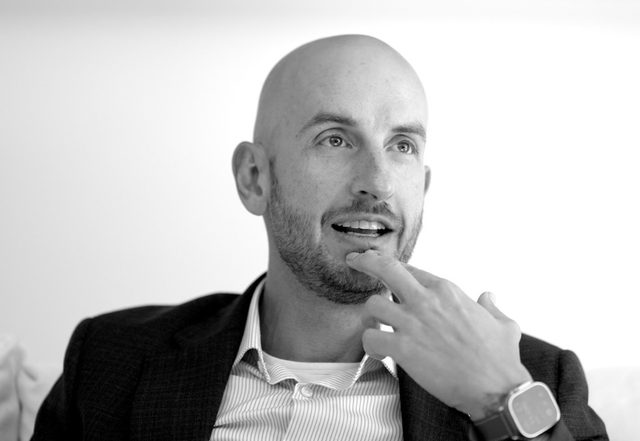
★★★★★Mar 8 – Mar 14, 2026
NotesThe StrangerMarginaliaMar 14, 2026I don’t see this as a disinterested man, but as someone who lost their mother and can’t process it well. He doesn’t perform grief the way we’re shown to perform it, viscerally, via theatrics. He mentions movies twice and the effect it has on people, making them laugh or agitated.
Mar 15, 2026When Marie asks him to marry, he said he’d do it. It’s all the same to him. Marry or not, here or there, this person or that. All of life is, in the Buddhist sense, one taste. Your feelings about it are just a projection of your internal bodily state. If you’re in good health lif
Mar 16, 2026The tender indifference of the universe. It doesn’t care for you forever, but it can be present with you now. And that’s beautiful.
I thought he was in shock and might suffer from Alexithymia. He has difficulty naming his sensations in conventionally accepted ways, and he doesn
Conversations with ClaudeMar 18, 2026Developed an original reading of The Stranger in which Meursault is not a native Frenchman but an indigenous Algerian whose family has adopted a French name — possibly Merzouk (مرزوق), meaning "the one blessed by God" — under colonial assimilation pressure. This reading reframes Meursault's famous affective flatness as Islamic sabr (patient composure under suffering) rather than existentialist detachment, and his fury at the chaplain as resistance to a foreign symbolic system rather than atheist philosophy. The reading connects to Lisa Feldman Barrett's argument in How Emotions Are Made — illustrated by the Tsarnaev trial — that courtrooms impose one culture's emotional vocabulary as universal, and to Tokarczuk's Books of Jacob, which shows communities performing dominant cultural identities while maintaining different interior lives.
• Meursault's name may derive from Merzouk (مرزوق), a common Maghrebi Arabic name meaning 'the one blessed by God' — plausible given the colonial Algerian practice of adopting French names for assimilation.
• Lisa Feldman Barrett's constructed emotion framework, illustrated by the Tsarnaev trial, maps directly onto Meursault's trial: both men were convicted partly for failing to produce the emotional performance their respective courtrooms expected.
• Islamic sabr — active composure under suffering, not the absence of feeling — reframes Meursault's behaviour at his mother's funeral as virtue rather than pathology.
• Meursault's rage at the chaplain, climaxing in 'he was on the others' side' (p.120 Vintage edition), reads as resistance to colonial symbolic imposition rather than existentialist atheism — the fury breaks from something long accumulated.
• Textual evidence supporting the reading: Marie says 'I'm browner than you' after a beach day; Meursault describes Parisians as having 'washed-out, white faces'; on arrest he is placed with Arab prisoners who receive him; he instantly reads Arab identity from a name alone.
• This reading deepens the colonial critique beyond the standard Said/O'Brien binary of colonizer vs. colonized — it locates the violence in whose emotional grammar gets to count as human.
Quotes“There at the home, where lives faded away, there as well, evening offered a wistful moment of peace. So close to death, Mama must've felt set free, ready to live once more.”
“Then he asked me whether I would be interested in changing my life. I replied that you can never really change your life and that, in any case, every life was more or less the same and that my life here wasn't bad at all.”
“When I was a student, I was very ambitious about having a career. But when I had to give up my studies, I realized quite soon that none of that sort of thing mattered very much.”
“Physical sensations got in the way of my emotions”
“I’d rather list the habit of analyzing my emotions.”
“as always, whenever I washed to get rid of people I’m barely listening to, I try to look as if I’m agreeing with them”
“He knows what to say. He understands the meaning of words”
“I would have liked to explain to him, politely, almost with a hint of emotion, that I have never truly been able to regret Anything. I was always preoccupied by what was about to happen, either today or tomorrow. But given the position I was in, I couldn't actually speak to anyone that way. I didn't have the right to show I had feelings or good intentions.”
“I may look as if I had nothing but I was sure of myself, sure of everything, sure of my life, sure of my impending death. Yes, that was all I had. But at least I had a hold on that truth as much as it had a hold on me. Id been right, I was still right, I had always been right.”
“But everyone knows that life isn't really worth living. In the end, I knew that it didn't matter much whether you died at thirty or at seventy, because in either case other men and women would of course go on living, and it would be like that for thousands of years. Nothing was more obvious, in fact. But I was still the one who would be dying, whether it was now or in twenty years.”
★★★★★Finished Mar 16, 2026
NotesHookedMarginaliaMar 17, 2026I can’t be more excited to read about lit crit and attachment theory.
Mar 18, 2026It seems like I can include stories of why a work has an effect on me with this style of reading. Sounds like fun.
Mar 19, 2026Felski’s interest in atmosphere and constellation link with Flight’s as a Constellation novel, where boundaries are blurry and fuzzy, and all of Tokarczuk’s work really. There’s no either this nor that, no delineation, no separation of critic and art, objective and subjective. It
Mar 20, 2026I’m going to build a feature where users can text characters.
Mar 21, 2026Connecting to the Stranger: we connect with Merseult through ironic distance, sharing of Postmodern values of the hermeneutics of suspicion.
Mar 22, 2026Felski wanting us to focus on the work nets of works, all of the reader relation factors in the story of how and why a work impacted a reader, is basically asking to make a writer out of the reader. While the major works are funnels of unmentioned social contexts, readers would n
Conversations with ClaudeMar 18, 2026A close reading of a passage from Felski's Hooked, working through neophenomenology, Ahmed's orientation theory, and Felski's method of aesthetic attachment. Used Perfect Days (Wim Wenders) as a test case, moving from personal testimony through structural analysis to a full Felskian reading — arriving at a concrete claim about how Wenders' devotional attention to routine creates conditions for loss-recognition in viewers who loved a world they couldn't fully possess.
• Neophenomenology keeps phenomenology's vocabulary of lived experience but grounds it historically and politically — describing how bodies navigate worlds built around assumptions that may or may not fit them.
• Ahmed's orientation framework is strongest on legal and institutional exclusion but thinner when extended to general felt alienation — normative scripts alienate many people they nominally include, including the incel and the working-class straight man.
• Felski's method runs in three steps: testimony (what did the work do to me?), structure (what kind of experience was that?), then craft (what did the work do to produce it?).
• Perfect Days works as a Felskian case study: Wenders' devotional attention to routine creates conditions for loss-recognition, specifically for people who loved a world they could never fully possess.
• The social life of aesthetic response is where Felski moves beyond testimony — personal responses map onto recognizable formations (expat mourning, the Western traveler seeking softness) that the work actively enables simultaneously.
Quotes“Opposition between a specialized guild of interpreters concerned with knowledge and meaning and a broader public driven only by feeling and pleasure create a distorted picture of both”
“Whether their approach is critical or affirmative, critics feel obliged to read novels, films and paintings closely, with due attention to detail. Yet lay responses to such texts are often held at arm's length, explained away before being fully seen. Not only are such responses more multifaceted than critics acknowledge, but they are also less remote from their own practices than they might think.”
“The history of critique pits detachment against attachment, mobility against stability. In contrast to the bourgeoisie glued to their possessions or women bound to their families and children, modern artists and intellectuals strive to slip free of ties, taking their cues from the figure of the Baudelairean Dandy”
“That books could distance readers from their milieu was already a familiar theme in the eighteenth century; critics complained that novels weakened social ties by creating a sense of distaste for what was nearest. Reading can cast the world in a radically different light, inspire us to turn away from what we thought we cared about. Books unite, Leah Price remarks, but they also divide; people can hide behind books, burrow into books, defend themselves with books (a handy repellent for women eating alone in public!), and use them to escape dull spouses, demanding children, and the trials of daily life. They promote acts of division as well as association.”
“Entire Ph.D. programs are still running to make sure that good American kids are learning the hard way that facts are made up, that there is no such thing as natural, unmediated, unbiased access to truth, that we are always prisoners of language, that we always speak from a particular standpoint, and so on," he remarks, "while dangerous extremists are using the very same argument of social construction to destroy hard-won evidence that could save our lives.”
“Taste is just a way of demarcating and sustaining cultural hierarchies. Not only does your background affect the kind of artwork you like—Bach rather than Barry Manilow, Rothko rather than Renoir—but you like them in different ways. To be highly educated is to be schooled in an aesthetic disposition and appreciation of form in relation to the history of art, while those without such training fall back on common sense criteria: moral or political subject matter, the realism of a painting, or the hummability of a tune.”
“The driving goal of modern thought it often seems is to wrest oneself free from a primordial immersion in the given whether one turns to Hegel or Foucault it is only by distancing oneself from what exists that one can gain any kind of critical purchase on it alienation is in this sense, an indispensable element of philosophy and politics, even when viewed in a negative light is taken to be irrevocable a fundamental a fundamental of our historical condition within modernity is a sundering of persons from any form of taken for granted, community or unity to be modern is to be ripped free of the bonds of traditional superstition to be borne along by shockwaves of social upheaval and secular disenchantment. The only alternatives are the false consolations of naïveté or nostalgia.”
“A text is not a sequence of signs to be decoded, but a structure that we come to inhabit. Reading atmospherically, our bodies become instruments. What is the tone, the pacing, the mood? What feels impending? What feels hauntingly persistent?”
“As the French sociologist Robert Escarpit wrote many years ago, the “cultured man” who knows Racine will never be so foolhardy as to admit that what he really loves is Tintin.”
“Other scholars meanwhile are only too eager to stress the contingent nature of aesthetic value in order to explain art as a form of politics by other means.”
“Both aesthetic and social theories of art, in short, struggle to account for the unforeseen”
“Fiction, for Blakey Vermeule, offers large doses of social information and cognitive stimulation that it would be too costly, dangerous and difficult for us to extract from the world on our own.”
“Such a perception, James Jiang drily remarks, “allows English academics to sleep comfortably at night, safe in the knowledge that their politics vindicates their vocation and their vocation their politics."”
“There is a surprising level of agreement among educators, politicians, philosophers and even talk show hosts that reading literature makes us more empathetic.”
“To rave about the stupidity and self-righteousness of others is inevitably to reveal the extent of one's own stupidity and self-righteousness.”
“Yet the possibility of gaining any kind of knowledge through literature requires a prior acknowledging, a willingness to be receptive. Rather than asking, “What does this work fail to see?” one can ask, “What is this work forcing me to notice?” Rather than deploying political or philosophical perspectives to interpret a work, one considers how it might alter or reframe those perspectives.”
“And yet demanding that the students perform generous reading seems oddly counterproductive: how can such readings be when they are carried out at the teacher's behest or to safeguard one's GPA?”
“For Hall, speaking was a mode of thinking on the move, not a delivery system for already formulated ideas but an ingrained responsiveness. What he embodied, above all, was a distinct manner of listening- thinking- being. The terms that Scott returns to repeatedly, that make up the scaffolding of his book, are “voice,” “listening,” “style,” “ethos,” “disposition.” What he prizes in Hall is an “an ethics of receptivity and reciprocal attunement.”
★★★★★Mar 16 – Mar 22, 2026
NotesAn Apprenticeship, Or, The Book of DelightsMarginaliaMar 23, 2026My god she’s so unlikable.
Mar 24, 2026Utterly insufferable woman
Mar 26, 2026Worst book of 2026
None. I will forget this book as soon as I can.
It wasn’t deeply moving. It was mundane and insane. This is the worst book I read all year.
None. She’s trapped in language and hopes language will free her
I think people profoundly lack social skills
Quotes“It’s only when we forget all knowledge that we begin to know”
“She knew it was impossible and every time she had thought shed understood herself it was because shed understood wrongly. Understanding was always a mistake—she preferred the largesse, so wide and free and without mistakes, of not-understanding. It was bad, but at least you knew you were in the full human condition.”
“As untransmissible as humans were, they were always trying to communicate with gestures, with stutters, with badly said words and bad words.”
“What she was doing to herself was cruel, taking advantage of her raw living flesh in order to get to know herself better since the wound was open”
“There was nothing but lacks and absences. And not even will”
“The condition can't be cured, but the fear of the condition is curable”
“There was also something about her made-up eyes that said with melancholy: decipher me, my love, or I'll have to devour you.”
“Persona. Lori had a poor memory and so did not know whether it was in ancient Greek or Roman theater that the actors before entering on stage would attach masks to their faces which by their expressions represented the role that each would play.”
★★★★★Mar 22 – Mar 26, 2026
NotesThe God of Small ThingsMarginaliaMar 26, 2026Is this poverty porn? The intro is ADHD. Estha is back home, but here’s how they were born, and then there was Sophie Mol’s funeral, but he is back now, but here’s how he was in Calcutta school.
Mar 28, 2026This book relies so much on foreshadowing and it’s corny. He didn’t know what part of history he’d be in! She was like a prophet but nobody listened. At page 200 I just wanted it to be over.
Mar 29, 2026It’s written like a cheesy thriller trailer. This story is cute BUT DANGER LIES AHEAD. It reminds me of an Iron and Wine song, a really beautiful love song, where the lovers hold each other and say one of us will die inside these arms and then spread our ashes around the yard. Do
Conversations with ClaudeMar 29, 2026A wide-ranging discussion of The God of Small Things through the lens of postcolonial literary criticism, the Booker Prize's institutional biases, and the uncomfortable question of whether the Ammu-Velutha affair constitutes a form of workplace sexual coercion obscured by Roy's lyrical prose. The conversation drew on Tokarczuk's Mr. Blau in Flights as a parallel case of power reversal in sexual dynamics, and examined Baby Kochamma's false accusation against Velutha — and her coercion of Estha — as a devastating deployment of upper-caste feminine credibility against a structurally unprotected man.
• Roy's lyrical framing of the Ammu-Velutha affair functions as an aesthetic alibi — the beautiful prose prevents the reader from applying the same power-abuse analysis they would apply if the genders were reversed.
• Tokarczuk's Mr. Blau scene in Flights uses role reversal to make predatory power dynamics legible: Blau only understands what he's been doing to his students when the widow tries the same move on him, and he cries.
• Baby Kochamma's false rape accusation against Velutha is a precise deployment of upper-caste feminine credibility — the system is pre-loaded to receive it, and Velutha's Dalitness makes him the perfect target.
• Her coercion of the child Estha to corroborate the lie is the novel's cruelest move — she uses his love for his mother as the instrument of a false testimony that kills a man, and Estha carries that complicity into his silence.
• The Booker Prize has a structural history of rewarding Commonwealth narratives that translate cultural otherness for Western palatability, and Roy's novel both exemplifies and exceeds that pattern — the critique cuts everywhere except, arguably, the affair itself.
• The gender-flip test exposes a blind spot Roy shares with the culture she's critiquing: an upper-caste male employer initiating a sexual relationship with a Dalit female worker in 1960s Kerala would have been written with very different prose temperature.
Quotes“She was frightened by the BBC famines and television wars that she encountered while she channel surfed. Her old fears of the Revolution and the Marxist-Leninist menace had been rekindled by new television worries about the growing numbers of desperate and dispossessed people. She viewed ethnic cleansing, famine and genocide as direct threats to her furniture.”
“People always love best what they identify most with.”
“He didn’t know that in some places, like the country that Rahel came from, various kinds of despair competed for primacy. And that personal despair could never be desperate enough. That something happened when personal turmoil dropped by at the wayside shrine of the vast, violent, circling, driving, ridiculous, insane, unfeasible, public turmoil of a nation. That Big God howled like a hot wind, and demanded obeisance. Then Small God (cozy and contained, private and limited) came away cauterized, laughing numbly at his own temerity. Inured by the confirmation of his own inconsequence, he became resilient and truly indifferent Nothing mattered much. Nothing much mattered. And the less it mattered, the less it mattered. It was never important enough. Because Worse Things had happened. In the country that she came from, poised forever between the terror of war and the horror of peace, Worse Things kept happening.”
“is it at all possible for you to prevent your washed-up cynicism from completely coloring everything?”
“Structurally—this somewhat rudimentary argument went—Marxism was a simple substitute for Christianity Replace God with Marx, Satan with the bourgeoisie, Heaven with a classless society the Church with the Party, and the form and purpose of the journey remained similar. An obstacle race, with a prize at the end. Whereas the Hindu mind had to make more complex adjustments.”
★★★★★Mar 26 – Mar 29, 2026
NotesUlyssesMarginaliaApr 1, 2026Ulysses cannot be understood in one reading
Apr 3, 2026Amazing how much I changed my view of the book. To view Bloom as traumatized and desperately trying to avoid thinking about Boylan. And also to not always think of translating the confusing passages, who sound better than my translation of them.
The different sources Joyce used.
Quotes“The 'motivated' characters in Ulysses - the Boylans, Bob Dorans, Lenehans, not to mention the insanely patriotic 'Citizen' - are apt to be figures of fun; 'motive', for Joyce, is comedy's simplification. The more we know of anyone the harder it is to say what he is about, he is about so many things, and the harder also to specify why he does any of them.”
“Characters in fiction are frequently made to stir up knowledge they'd have left tranquil, or exchange remarks they'd not have uttered, for the sake of imparting some fact to the reader. By Joyce's principle this is disallowed. It warps the characters. Indeed, with exceptions to be carefully deliberated, the reader should not be told what no one present would think worth an act of attention.”
“Ulysses the naturalistic novel ends with 'Wandering Rocks', and with it ends, for the present, the role of the book's first Homer, a naturalist who had been added to Europe's inventory of Homers during Joyce's early lifetime.”
★★★★★Mar 30 – Apr 3, 2026
NotesThe Master and MargaritaMarginaliaApr 4, 2026I’m enjoying this depiction of Jesus as someone that’s just very kind and intuitive. Less Son of God and more of just a nice and smart dude.
Apr 5, 2026Not really enjoying the chase scene and the idea that the Homeless went crazy. We’re wasting chapters and pages on his insanity. Why?
Also surprised by the constant reference to the police, and how they’ll punish you.
Apr 8, 2026It’s amazing that, for a dramatist, how poor the quality of conversation is, how weak the dialogue. No interesting exchanges. Just everyone a puppet of the purpose, no exchanges or growth
Apr 9, 2026What’s stronger than bureaucracy is nobility.
Apr 11, 2026I have no idea why the Master is thought of as a master. His story of Pilate is underwhelming.
Apr 12, 2026Glad this is over. I didn’t enjoy this at all.
That defiance isn’t what makes your art thrive. It’s networked, and your art only thrives if its idea has come. You can’t make something entirely outside of the system.
People thriving in the system were tormented and given no int
Conversations with ClaudeApr 8, 2026Discussed why the devil's entourage torment chapters in Book 1 feel repetitive and how to read them structurally. The repetition is Bulgakov's indictment of Soviet society at scale — not a few corrupt individuals but a system-wide rot exposed through carnivalesque comedy. The conversation also addressed the tonal shift into Book 2 and what Margarita's broom flight represents.
• The repetition in the torment chapters is deliberate and structural — each variation targets a different Soviet type (the opportunist, the apparatchik, the toady), building a cumulative indictment of an entire system rather than individuals.
• Bulgakov uses Bakhtinian carnivalesque logic: the low overturning the high, grotesquely and temporarily. Woland's crew doesn't torment the innocent — they expose what was already there.
• The grinding repetition of Book 1 functions as overture, establishing Moscow as chaotic, material, and farcical so that Margarita's broom flight registers as genuine liberation by contrast.
• Margarita is the axis the novel turns on — the first character who chooses fully and recklessly. Her flight marks the shift from farce to myth, from the satirical to the transcendent.
Apr 12, 2026A sustained critical reading of The Master and Margarita that interrogated the novel's moral architecture, its biographical roots in Bulgakov's suppression, and the gap between its cosmic ambitions and what it actually demonstrates on the page. The conversation moved from the novel's basic structure through the problem of depicting genius in fiction, arriving at a reading of the book as a conservative passion narrative — Bulgakov reaching backward into religious frameworks to resist Soviet materialism, constructing a theology of cancellation in which the artist is Christlike, the institution is Pilate, and posthumous vindication is resurrection.
• The novel's moral universe has a fixed aristocracy of spirit — artists and the historically significant exist in a different ontological register from ordinary people, which makes its ethical claims smaller than its ambitions.
• Woland functions not as an agent of evil but as a diagnostician, accelerating tendencies already present in his targets — and ultimately as an errand-runner for Yeshua, executing the light's requests from within the dark.
• Bulgakov cannot write a novel better than he can write, so the Master's masterpiece is capped at Bulgakov's own ceiling — the vindication the novel demands is larger than what the embedded Pilate text can support.
• The book's cultural weight derives less from the writing than from timing and suppression: it arrived in 1966 naming the exact system people had been living under, authored by a man safely dead, which fused the experience of reading with the experience of resistance.
• Bulgakov's response to Soviet modernity is structurally conservative — reaching behind the rupture to the oldest available framework (good and evil, Jesus and Satan, cosmic consequence for cowardice) as a way of asserting that the materialist experiment is a blip against permanent human drama.
• The novel constructs a passion narrative in which the cancelled artist maps onto the condemned Christ — Pilate's cowardice mirrors the literary bureaucrats' cowardice, and posthumous vindication mirrors resurrection.
• The deepest problem: the novel presupposes that artistic truth sits above institutional truth, but what the novel calls eternal vindication is materially and contingently produced by the next institution finding the previous institution's victims useful.
Quotes“there’s something not nice hidden in men who avoid wine, games, the society of charming women, table talk. Such people are either gravely ill or secretly hate everybody around them.”
“Generally it never happens that anything goes back to what it used to be”
“Manuscripts don’t burn”
★★★★★Apr 2 – Apr 12, 2026
NotesThe Red and the BlackMarginaliaApr 17, 2026Amazing the Julien completely destroys this woman’s life. At first it was for conquest and duty or whatever. The last meeting was just for his own sense of love and desire.
Apr 18, 2026I'm seeing Don Quixote in Julien
Apr 19, 2026In both cases of love the women refer to their experience of books to determine if they are in love. Mme de Renal did not read and so doesn’t know if she is in love; Mathilde refers to her books and knows she is in love
Apr 21, 2026Amazing how Julien is ready to duel people for looking at him the wrong way, and amazing how this terrified me when I saw it depicted in rap music or anything around hood culture. The importance of honor and saving face aligns with a romantic ideal so long as it’s fictionalized,
Apr 25, 2026Ambition is what matters. How am I being ambitious? How have I dampened my fire?
I didn’t expect him to fuck his way to the top. It’s a common trope for women to do so, and rarely do I see it in men.
Mathilde’s relationship was about manipulation and dominion. Not healthy at al
Conversations with ClaudeApr 19, 2026Discussed the figure of Danton as Julien Sorel references him in The Red and the Black — a symbol of audacious self-made power from the Revolutionary era. Explored the key historical and structural context for reading the novel: the Restoration setting, Stendhal's fake epigraphs, the meanings of the title's two colors, Stendhal's position as a Napoleonic veteran, and the centrality of the trial as the novel's true climax.
• Danton functions as a secular saint for Julien — proof that birth needn't be destiny — but the tragedy is that by the Restoration, the window for such self-making has already closed.
• Stendhal wrote the novel in 1830 while the July Revolution was unfolding, giving it the voltage of live reportage dressed as fiction rather than historical retrospection.
• The fake epigraphs signal from the first page that authenticity is a performance — the same game Julien plays throughout the entire novel.
• Red and black encode both the choice between army and church (the two ladders left for an ambitious young man with no name) and roulette: the role of pure chance in a society that pretends to run on merit.
• The trial is the novel's real center: Julien abandoning performance, speaking honestly, and essentially choosing death — tragedy not by circumstance but by clarity arriving at the last possible moment.
Apr 24, 2026A wide-ranging discussion using The Red and the Black as a lens on ambition, therapy culture, and masculinity. Julien Sorel's arc — blocked from the army, rerouted through the church, advancing via seduction — was read as strategic adaptation: Napoleon's drive finding a new theater in drawing rooms. The conversation traced how Philip Rieff's "triumph of the therapeutic" has replaced the church as civilizing project, and how contemporary storytelling foregrounds trauma where Stendhal gave it three sentences and moved on.
• Julien Sorel operates as a male sugar baby — his beauty, intensity, and learning deployed as performance capital in a system closed to his vertical ambition through traditional means. Stendhal watches this without condemnation, like a naturalist observing adaptation.
• Therapy culture functions as secular Christianity: Philip Rieff's 1966 'Triumph of the Therapeutic' argued that once a culture loses a shared moral framework, psychological well-being becomes the organizing myth. Priest becomes analyst, confession becomes the session, salvation becomes adjustment.
• The ambition that dies in therapy tends to be vertical ambition — the kind that feeds on hierarchy and comparison. What survives resembles vocation: the thing you'd do regardless of elevation. Julien has hunger, not vocation, and hunger properly examined reveals the wound beneath it, blunting the blade.
• Stendhal gave Julien's miserable childhood three sentences and focused on what he did with that momentum. Contemporary storytelling reverses this ratio — the wound becomes the story, and the adaptation gets called toxic masculinity.
• David Whyte's bell-and-blackbird tension maps onto the therapeutic era: the inward turn keeps multiplying (journaling, somatic work, retreats), while the blackbird's call to outward action gets harder to hear. At some point depth becomes elaborate staying still.
Quotes“Julien, on his side, had lived like a real child since his stay in the country, as happy to run around chasing butterflies with his pupils as they were. After so much constraint and cunning manoeuvring, alone, far from the observation of men, and by instinct not at all afraid of Mme de Renal, he gave himself up to the pleasure of existence, so powerful at that age, and in the midst of the most beautiful mountains in the world.”
“In Paris love is born of fiction. The young tutor and his shy mistress would have found the explanation of their situation in three or four novels, or even in some couplets from the Gymnase? The novels would have outlined for them the parts to play, showed them the model to imitate; and sooner or later, although with no pleasure, perhaps reluctantly, vanity would have forced Julien to follow the model.”
“Since Mme de Rênal never read novels, all the little details of her happiness were new to her.”
“So I lack true resolution, he said to himself. This was the suspicion which gave him most pain. I'm not the wood out of which great men are fashioned, since I'm afraid that eight years spent earning my bread will rob me of the sublime energy required to do extraordinary things.”
“In my asinine pride, I have congratulated myself so often on being different from other young peasants! he said to himself in morning. Well, I've now lived long enough to understand the difference breeds hatred”
“They may well achieve power – but, good God, at what cost!”
“She abhorred lack of character - this was her great objection to the handsome young men surrounding her. The more they mocked gracefully at everything which deviated from the fashion, or which in pretending to follow it followed it clumsily, the more diminished they became in her eyes.”
“"Make her afraid," he cried, suddenly flinging the book away. "The enemy will only obey me so far as I frighten him. That's when he daren’t despise me."”
“Politics, retorts the author, is a millstone tied to the neck of literature, and drowns it in less than six months. Politics in imaginative work is like a shot in the middle of a concert. The noise is deafening but it imparts no energy. It doesn't harmonize with the sound of any other instrument. Such political talk mortally offends half of one's readers - and bores the other half, who, in a different context, in the morning paper, find such things interesting and lively...”
“I am the only one who knows what I might have achieved. For everyone else I remain no more than a MIGHT HAVE BEEN”
★★★★★Apr 12 – Apr 25, 2026
NotesTranscriptionMarginaliaApr 30, 2026Hilarious how fucked the narrator is without a recording of this garbled and delicious talk.
May 1, 2026Kafka’s Hunger Artist is very appropriate here. Watch the spectacle of his us suffering for art; the greater the suffering, the more laurels. Trauma truffling, though Emi won’t eat the truffles. Contemporary art needs most of it to be mental health laden, verbose in therapy speak
Quotes“He was a coward. Not physically. Metaphysically. Like most people he needed the radio to tell him his beliefs.”
“But what I am saying is that radio, it is a recovery. Of the voice without the body. That like everything new, it is also ancient. The truly new touches something before the merely recent. This I like about Freud–much I don’t like–that every discovery is rediscovery. Cinema recovers cave. This is Plato, too. Anamnesis Because for all of us the first experience of language is voices traveling through the”
“I kept seeing the flowers as organic one instant and as artificial the next, a kind of duck-rabbit effect, but not between things the object might represent, but between nature and culture, the given and the constructed.”
“Once–only once–did I tell him about my concern with Emmie’s eating, and before the word hungerkünstler was fully out of his mouth, before he could quote his beloved Kafka at me, or launch into some discourse about the history of pre-Christian asceticism, I snapped at him in German: this is not fucking theater, dad, this isn’t art or literature, Emmie isn’t a character in a fiction,”
“You go in with a problem my daughter won't eat. They ask you some questions and they give you a diagnosis that repeats what you said with more technical sounding language, as if this process of translation constitutes a gain in knowledge, and then there was a second translation and epistemological sleight of hand, the magical contraction of the diagnosis into an acronym. My daughter won't eat becomes ARFID. The acronym is like a code word. The offer towards a miracle. Numbers are objective right suddenly it's science no matter that our FID is the same mystery. It's just an envelope for ignorance. ARFID just means we have no physiological explanation, but it doesn't yet seem to involve the body image issues we associate with anorexia or bulimia.”
★★★★★Apr 30 – May 1, 2026
NotesThe DoorMarginaliaMay 2, 2026Introduction points to the idea of narration as salvation. No unconfessed sin goes unpunished.
---
Emerence is constantly moving, rarely sitting. The more active we are the less likely we are to be confrontational. She handles the hangman with grace because she’s so active.
--
May 4, 2026Emerence reminds me of Joanina from Drive Your Plow Over the Bones of the Dead. It’s not often you see an older women as the central figure of a book. In both they keep care of houses and animals, and have a Post-Faustian wisdom to them.
May 6, 2026I deeply pitied the narrator, who did her best in a shitty situation. And she was punished for it.
Not much at all. The communism had no meaning to me. One political flavor or another, it’s all the same crap. What mattered was what happened between the two characters. My friend
Conversations with ClaudeMay 5, 2026Explored Emerence as a PostFaustian/Traditionalist figure versus the narrator as a Modernist in The Door. Emerence's total community embeddedness is contrasted with the narrator's parceled, privatized existence — crystallized in the Christmas TV gift as a category error. Discussed the "everybody wants a village, nobody wants to be a villager" critique and its limits, including how the narrator's literary labor is itself a diffuse form of care the novel fails to recognize as such.
• The Christmas TV gift functions as a self-portrait: the narrator gives Emerence the thing that would console the narrator — private retreat from community — which Emerence has no use for, since she IS community rather than someone who needs respite from it.
• Emerence is PostFaustian in the sense that she predates the Faustian bargain — she hasn't traded soul/ground for advancement. The narrator has taken that trade (literature, interiority, recognition) and carries the guilt of someone who knows what she surrendered.
• Emerence's psychological interiority — the sealed room, the hoarding, the door that stays shut — is the price of her total communal availability. The village extracts everything; she builds a private self no one can access as compensation.
• The modernist parcelization of care (many people giving a little) is more humane by labor standards but produces thinner, more fungible social bonds. The narrator's gifts are exchangeable; Emerence's are irreplaceable because they ARE her.
• The novel has a blind spot: it cannot see the narrator's writing as labor or as diffuse care for future readers across time. The typewriter reads as withdrawal when it might also be a different kind of giving — just distributed across strangers and decades rather than concentrated in a street.
Quotes“In her eyes, any work that didn't involve bodily strength and use of the hands was loafing, little better than a conjuring trick. I had always recognised physical achievements, but had never rated them above mental ones, and if ever in the course of my life the philosophy of Jean Giono had prevailed too strongly, those years of the Personality Cult would have freed me from its influence. Books formed the basis of my world, my unit of measure was the printed word, but I didn't think of it as the one salvation, as she considered her standard to be. Without consciously arriving at the concept herself, or being aware of and using the phrase "anti-intellectual", she was the thing itself, an anti-intellectual.”
“Whenever I could, I would rush back to my old village to seek out what had gone, what could never be brought back, the shadows that the family house had once cast on my face, my long-lost former home. And I found nothing, for where has the river wandered whose waters carried away the shards of my early life?”
“We were dealing in such different currencies. Emerence's dictionary featured filth, scene, scandal, laughing stock of the street and shame. His contained law, order, solutions, solidarity, effective measures. Both phrasebooks were accurate, it was just that they were in different languages.”
“what had been lost had taken a new form, that the old home and the new one were one and the same, and were waiting to receive her.”
★★★★★May 1 – May 6, 2026
NotesUlysses on the LiffeyMarginaliaMay 6, 2026Amazing that Bloom is based on Alfred Hunter, a nice guy who helped Joyce after he was rocked in a fight, and how June 16th is when we and Nora had their first date.
May 7, 2026Stephen is mind to Bloom’s body. Stephen abstract to Bloom’s concrete.
May 8, 2026The first six chapters are separate dialectics, thesis antithesis synthesis, from body to mind to something, from place to time to something, both for Stephen and Bloom. And once the dialectic is done, you still have a lot of day to keep doing.
May 10, 2026It seems like what I’m getting here isn’t much insight that wows me, but just summaries I’ll remember when reading Ulysses again.
May 25, 2026Kenner's book was a lot more accessible, surprisingly, with a lot more human interest. Ellmann's was kind of a rambling mess.
He doesn't have much of a biological angle in the book. It's still system building.
No. He's not mentioning much biography in the book and you asked
★★★★★May 6 – May 15, 2026
NotesAnatomy of Criticism: Four EssaysMarginaliaApr 25, 2026This seems to be like Mimesis: high Modernist attempt to show the grand structure/grand narrative of literature. It’s all one poem, all one work, that everyone is participating in and advancing. An attempt at some objective structure, a story of history, and not just one damned t
Apr 28, 2026Two thoughts:
1) Frye and Auerbach believe in one grand narrative of literature, of it all speaking to each other. Very modernist, and not postmodern. I wonder what texts don’t fit into their patterns and how those texts are discarded. Like the Bible puts together its canon. Wha
Apr 30, 2026Reading aloud seems to be the best way for me to read litcrit.
May 1, 2026Profoundly dense and confusing. Seems like he’s saying that all metaphors points to an archetype, that all poetic roses are the same rose, and that all of these archetypes point to monads, of dark and light, feasting, and sexuality, known to all humanity. He goes on to try to det
May 2, 2026The ironic world is the demonic, where you must obey the law in itself, enforced by invisible forces unfathomable.
May 8, 2026As we don’t write tragedies anymore, but yearn for it, then socialist politicians create tragic narratives by focusing on the arrogance and moral decay of the powerful figures they want to pilfer. Ramp up the public’s bloodlust to gain more votes.
May 13, 2026I like the section of merging the abstract and the concrete, the adjective noun of noun.
May 16, 2026I’m thinking of Frye and the distinction between comedy vs tragedy, with the Senex, the old dragon, hoarding and protecting the wasteland:
Could it be that comedy is of the youth who want to squander their energies and enjoy the fruits of the labour of their parents, who resent
May 17, 2026Oh I have no idea. I think you’d have a better chance predicting the weather. The more variables in a system the more difficult it is to map.
The books that fit this system are those with ideas whose time has come. Many books sell well that exist outside of academic interest an
Conversations with ClaudeMay 5, 2026Explored Frye's comic mythos — the eiron/senex dynamic, youth overcoming the blocking figure to form a new society — and tested it against the Garden of Eden. Eden fits the comic structure (divine Father as senex, transgression that succeeds) but refuses the festive resolution, raising the question of whether the Fall is a comedy cancelled at its climax or the necessary first act of the Bible's macro-comic arc. Frye's U-shaped reading of scripture (descent, then ascent to New Jerusalem) suggests the comedy of Eden requires the entire Bible to complete.
• Frye's comic structure turns on the eiron (youth) defeating the alazon (senex/blocking figure), with a new society crystallizing in festivity — comedy trusts that desire can reorganize the existing order.
• The sincerity/irony axis maps onto comedy/tragedy: comedy is structurally sincere (desire can be satisfied, the new can overcome the old); tragedy and irony both circle the sense that blocking forces win.
• Eden fits the comic structure — God as senex, humanity as youth in its pastoral-innocent phase, transgression that succeeds — but expulsion replaces festivity, making it either an anti-comedy or a comedy whose resolution is deferred across the entire biblical arc.
• Paradise is pre-narrative: nothing can happen in the unfallen garden. The Fall is the precondition for comic movement — the necessary loss that initiates the quest toward a maturer paradise.
• The serpent is the first ironist — its promise is simultaneously true (they will know good and evil) and self-consuming. Irony as the mode of transgression, sincerity as the longing to return — the oscillation that defines metamodern sensibility is already encoded in the Fall.
Quotes“Mediocre works of art remains a random and peripheral form of critical experience, whereas the profound masterpiece draws us to a point at which we seem to see an enormous number of converging patterns of significance.”
“The root idea of pathos is the exclusion of an individual on our own level from a social group to which he is trying to belong. Hence the central tradition of sophisticated pathos is the study of the isolated mind, the story of how someone recognizably like ourselves is, broken by a conflict between the inner and outer world, between imaginative reality and the sort of reality which is established by a social consensus. Such tragedy may be concerned, as it often is in Balzac, with a mania or obsession about rising in the world, this being the central low mimetic counterpart of the fiction of the fall of the leader. Or it may deal with the conflict of inner and outer life, as in Madame Bovary and Lord Jim, or with the impact of inflexible morality on experience, as in Melville's Pierre and Ibsen's Brand. The type of character involved here we may call by the Greek word alazon, which means impostor, someone who pretends or tries to be something more than he is. The most popular types of alazon are the miles gloriosus and the learned crank or obsessed philosopher.”
“the Romantic poet is often socially aggressive: the possession of creative genius confers authority, and its social impact is revolutionary.”
“We have here a type of irony which exactly corresponds to that of two other major arts of the ironic age, advertising and propaganda. These arts pretend to address themselves seriously to a subliminal audience of cretins, an audience that may not even exist, but which is assumed to be simple-minded enough to accept at their face value the statements made about the purity of a soap or a government's motives.”
“Popular art is normally decried as vulgar by the cultivated people of its time; then it loses favor with its original audience as a new generation grows up; then it begins to merge into the softer lighting of “quaint,” and cultivated people become interested in it, and finally it begins to take on the archaic dignity of the primitive.”
“If men were compelled to make the melancholy choice between atheism and superstition, the scientist, as Bacon pointed out long ago, would be compelled to choose atheism, but the poet would be compelled to choose superstition, for even superstition, by its very confusion of values, gives his imagination more scope than a dogmatic denial of imaginative infinity does.”
“We said that we could get a whole liberal education by picking up one conventional poem, Lycidas for example, and following its archetypes through literature. Thus the center of the literary universe is whatever poem we happen to be reading.”
“The machinery of fate is administered by a set of remote invisible gods, whose freedom and pleasure are ironic because they exclude man, and who intervene in human affairs chiefly to safeguard their own prerogatives. They demand sacrifices, punish presumption, and enforce obedience to natural and moral law as an end in itself.”
“Thus the movement from pistis to gnosis , from a society controlled by habit, ritual bondage, arbitrary law and the older characters to a society controlled by youth and pragmatic freedom is fundamentally, as the Greek words suggest, a movement from illusion to reality. Illusion is whatever is fixed or definable, and reality is best understood as its negation: whatever reality is, it’s not that . Hence the importance of the theme of creating and dispelling illusion in comedy: the illusions caused by disguise, obsession, hypocrisy, or unknown parentage.”
“It seems like modern day comedy versus tragedy, has to do with numerous ism in which the youth are not accepted into society the way informer comedies of old it was the young who was trying to marry the young son who was trying to marry the daughter of a grouchy father and the son had to overcome obstacles, and when he did so finally, then he would be part of a new society, and the old father would be hosted, and then this became the heroes quest in which the old father became a dragon figure in which the young had to slay the old in order to build a new society and boomers and boomers are reenacting this unknowing that they're part of the same tradition”
“Mutilation or physical handicap, which combines the themes of sparagmos and ritual death, is often the price of unusual wisdom or power, as it is in the figure of the crippled smith Weyland or Hephaistos, and in the story of the blessing of Jacob.”
“there a number of the great archetypal myths of Greek and Northern culture are personified as a group of old men who forsook the world during the Middle Ages, refusing to be made either kings or gods, and who now interchange their myths in an ineffectual land of dreams. Here the themes of the lonely old men, the intimate group, and the reported tale are linked.”
“The sixth or penseroso phase is the last phase of romance as of comedy. In comedy it shows the comic society breaking up into small units or individuals; in romance it marks the end of a movement from active to contemplative adventure. A central image of this phase, a favorite of Yeats, is that of the old man in the tower, the lonely hermit absorbed in occult or magical studies. On a more popular and social level it takes in what might be called cuddle fiction: the romance that is physically associated with comfortable beds or chairs around fireplaces or warm and cosy spots generally.”
“It is the admixture of heroism that gives tragedy its characteristic splendor and exhilaration. The tragic hero has normally had an extraordinary, often a nearly divine, destiny almost within his grasp, and the glory of that original vision never quite fades out of tragedy.”
“attitude of these people reminds us rather of Montaigne: they had the eiron’s sense of the value of conventions that had been long established and were now harmless; they had the eiron’s distrust of the ability of anyone’s reason, including their own, to transform society into a better structure. But they were also intellectually detached from the conventions they lived with, and were capable of seeing their anomalies and absurdities as well as their stabilizing”
“It is an established datum of literature that we like hearing people cursed and are bored with hearing them praised, and almost any denunciation, if vigorous enough, is followed by a reader with the kind of pleasure that soon breaks into a smile. To attack anything, writer and audience must agree on its undesirability, which means that the content of a great deal of satire founded on national hatreds, snobbery, prejudice, and personal pique goes out of date very quickly.”
“Two of these connected with the matter under discussion, the fusion of the concrete with the abstract, may be noted. An abstract noun in the possessive case followed by an adjective and a concrete noun (“death’s dateless night” is a Shakespearean example) is a nineteenth-century favorite. In J. R. Lowell’s Harvard Commemoration Ode of this figure is employed nineteen times, “life’s best oil,” “Oblivion’s subtle wrong” and “Fortune’s fickle moon” being three examples. In the twentieth century it was succeeded in favor by another phrase of “the adjective noun of noun” type, in which the first noun is usually concrete and the second abstract. Thus: “the pale dawn of longing,” “the broken collar-bone of silence,” “the massive eyelids of time,” “the crimson”
“abaca type. We have several times noticed the close relation between the visual and the conceptual in poetry, and the radical of opsis in the lyric is riddle , which is characteristically a fusion of sensation and reflection, the use of an object of sense experience to stimulate a mental activity in connection with it. Riddle was originally the cognate object of read, and the riddle seems intimately involved with the whole process of reducing language to visible form, a process which runs through such by-forms of riddle as hieroglyphic and ideogram. The actual riddle-poems of Old English include some of its finest lyrics, and belong to a culture in which such a phrase as “curiously inwrought” is a favorite aesthetic judgement. Just as the charm is not far from a sense of magical compulsion, so the curiously wrought object, whether sword-hilt or illuminated manuscript, is not far from a sense of enchantment or magical imprisonment. Closely parallel to the riddle in Old English is the figure of speech known as the kenning or oblique description which calls the body the bone-house and the sea the whale-road.”
“Romance is older than the novel, a fact which has developed the historical illusion that it is something to be outgrown, a juvenile and undeveloped form. The social affinities of the romance, with its grave idealizing of heroism and purity, are with the aristocracy (for the apparent inconsistency of this with the revolutionary nature of the form just mentioned, see the introductory comment on the mythos of romance in the previous essay). It revived in the period we call Romantic as part of the Romantic tendency to archaic feudalism and a cult of the hero, or idealized libido. In England the romances of Scott and, in less degree, the Brontes, are part of a mysterious Northumbrian renaissance, a Romantic reaction against the new industrialism in the Midlands, which also produced the poetry of Wordsworth and Burns and the philosophy of Carlyle. It is not surprising, therefore, that an important theme in the more bourgeois novel should be the parody of the romance and its ideals. The tradition established by Don Quixote continues in a type of novel which looks at a romantic situation from its own point of view, so that the conventions of the two forms make up an ironic compound instead of a sentimental mixture. Examples range from Northanger Abbey to Madame Bovary and Lord Jim”
“There is no reason why a great poet should be a wise and good man, or even a tolerable human being, but there is every reason why his reader should be improved in his humanity as a result of reading him.”
★★★★★Apr 25 – May 17, 2026
NotesMadame BovaryMarginaliaMay 16, 2026Really reminds me of Joyce’s writing style in Dubliners. Short sentences montages to create a character.
---
Immediately not fond of Emma, and I see myself as Charles: doting but not dangerous or exciting, routine and content.
May 17, 2026The gravedigger planted potatoes, and every epidemic he has to get rid of some potatoes to bury the dead. “You feed off the dead” is a great phrase. Do we use our land for food or for bodies that we earn money from with which we then buy food?
May 18, 2026Amazing how language is used for love. With Leon nothing was said, and so nothing done. With Rudolphe, it’s the words of Romantic Tropes, the language Emma read in her books, that inspires their action. And when they first speak, at the fair, it’s contrasted with the village awar
May 19, 2026Emma Bovary, like Julien Sorel’s first lover, become devoutly religious after their adultery. Piety is the virtue signal to absolve the guilt of the sinners. High moralizing protects you from scrutiny. The louder you cry, the less people examine your faults.
---
This book is l
May 20, 2026The romance/comedy is of the perpetual feast, the endless wedding, with no responsibilities to the dry earth. No labour, only reward. Emma’s tragedy is hope for perpetual comedy.
---
The last part is reading like addiction. Emma is chasing the dragon, ruining her family in pawn
May 21, 2026The attention to Homais’ life afterwards made me wonder. It’s not just about Emma and her language curse. Homais had his own, but he played the game well and got his Legion of Honour.
What does it mean to have a yearning that feels genuinely your own? What other yearning is ther
Quotes“Before her wedding-day, she had thought she was in love; but since she lacked the happiness that should have come from that love, she must have been mistaken, she fancied. And Emma sought to find out exactly what was meant in real life by the words felicity, passion and rapture, which had seemed so fine on the pages of the books.”
“It was one of those pure sentiments that do not interfere with daily life, that we cultivate for their very rarity, and whose loss is more distressing than their possession is delightful.”
“Emma was just like any other mistress; and the charm of novelty, falling down slowly like a dress, exposed only the eternal monotony of passion, always the same forms and the same language. He did not distinguish, this man of such great expertise, the differences of sentiment beneath the sameness of their expressions. Because he had heard such-like phrases murmured to him from the lips of the licentious or the venal, he hardly believed in hers; you must, he thought, beware of turgid speeches masking commonplace passions; as though the soul's abundance does not sometimes spill over in the most decrepit metaphors, since no one can ever give the exact measure of their needs, their ideas, their afflictions, and since human speech is like a cracked cauldron on which we knock out tunes for dancing-bears, when we wish to conjure pity from the stars.”
“Do you not realize that there are souls in endless torment? They are craving for dreams and action, the purest passions, the wildest pleasures, and thus they cast us into all kinds of fantasies, and foolishness.”
“For every bourgeois, in the heat of youth, if only for a day, for a minute, has believed himself capable of immense passions, of heroic enterprises. The most mediocre libertine has dreamed of oriental princesses; every notary carries about inside him the debris of a poet.”
★★★★★Finished May 21, 2026
NotesOranges Are Not the Only FruitMarginaliaMay 22, 2026It starts with a clear awareness of binaries. And the intro suggests that straight white men have more confidence. How much more? Six more? How do you know? How do you measure? In early nonbinary language the rejection of binaries becomes its own binary. “There are two types of p
May 23, 2026We often hear about the Catholic Church’s sexual abuses. We hear of it in new wave Buddhism as well. Spiritual leaders, in positions of power over the vulnerable converted, have sex with them, where the vulnerable aren’t as free to say no. It’s spoken about in angry terms when me
★★★★★May 22 – May 23, 2026
NotesMiddlemarchMarginaliaMay 23, 2026Dorothea is very contrarian. I love the writing style. I was challenged at first but now I’m all in.
May 24, 2026Fred isn’t really kind to his uncle, wanting to sit and connect. He does seem like he just wants money and Mary.
---
I love how there’s plot, and dialogue, and metaphysics. An understanding of nature, of egoism, of communication. There’s subtlety and kindness here. This isn’t a
May 27, 2026Fred’s apology is completely selfish, focused on his intentions and less on Mary’s harm.
---
Women enter relationships with expectations unvoiced, and are disappointed when their realities don’t match their fantasies.
May 30, 2026So much communication about people’s troubles from lack of communication.
May 31, 2026My god the medical chapter was dense. There’s so much character building in figures that aren’t central, many of them having an impact on the major characters. Because every character is major; none are foils.
Jun 2, 2026It’s amazing how much the author has to explain the thoughts of her characters that can’t explain themselves. They’re loaded with rich language and have almost no access to clearly expressing their wants and needs, and make plans with others without explaining what those plans ar
Jun 5, 2026Amazing how much happens in this novel. So many characters, so much context. Deprive any one of the characters of context and it’d be easy to dislike them, like Fred or Rosamund.
Jun 6, 2026It’s amazing how much is written to communicate what’s happening in people who aren’t communicating with each other. Here’s a story about people keeping their inner lives hidden and, in doing so, fucking up their outer lives.
I think this book is a great commentary about how li
Quotes“strong interest. “Your sister is given to self-mortification, is she not?” he continued, turning to Celia, who sat at his right hand. “I think she is,” said Celia, feeling afraid lest she should say something that would not please her sister, and blushing as prettily as possible above her necklace. “She likes giving up.” “If that were true, Celia, my giving-up would be self-indulgence, not self-mortification. But there may be good reasons for choosing not to do what is very agreeable,” said Dorothea.”
“The really delightful marriage must be that where your husband was a sort of father, and could teach you even Hebrew, if you wished it.”
“The difficult task of knowing another soul is not for young gentlemen whose consciousness is chiefly made up of their own wishes.”
“'Are you beginning to dislike slang, then?' said Rosamond, with mild gravity. 'Only the wrong sort. All choice of words is slang. It marks a class.' "There is correct English: that is not slang' 'I beg your pardon: correct English is the slang of prigs who write history and essays. And the strongest slang of all is the slang of poets.'”
“that toy-box history of the world adapted to young ladies which had made the chief part of her education,”
“we all of us, grave or light, get our thoughts entangled in metaphors, and act fatally on the strength of them.”
“Suppose we turn from outside estimates of a man, to wonder, with keener interest, what is the report of his own consciousness about his doings or capacity: with what hindrances he is carrying on his daily labors; what fading of hopes, or what deeper fixity of self-delusion the years are marking off within him; and with what spirit he wrestles against universal pressure, which will one day be too heavy for him, and bring his heart to its final pause. Doubtless his lot is important in his own eyes; and the chief reason that we think he asks too large a place in our consideration must be our want of room for him”
“Confound you handsome young fellows! You think of having it all your own way in the world. You don’t understand women. They don’t admire you half so much as you admire yourselves.”
“One's self-satisfaction is an untaxed kind of property which it is very unpleasant to find depreciated.”
“Failure after long perseverance is much grander than never to have a striving good enough to be called a failure.”
“Very little achievement is required in order to pity another man's shortcomings.”
“Young folks may get fond of each other before they know what life is, and they may think it all holiday if they can only get together; but it soon turns into working-day, my dear.”
“How can you bear to be so contemptible, when others are working and striving, and there are so many things to be done—how can you bear to be fit for nothing in the world that is useful? And with so much good in your disposition, Fred—you might be worth a great deal.”
“Selfish people always think their own discomfort of more importance than anything else in the world.”
“One morning, some weeks after her arrival at Lowick, Dorothea—but why always Dorothea? Was her point of view the only possible one with regard to this marriage? I protest against all our interest, all our effort at understanding being given to the young skins that look blooming in spite of trouble; for these too will get faded, and will know the older and more eating griefs which we are helping to neglect. In spite of the blinking eyes and white moles objectionable to Celia, and the want of muscular curve which was morally painful to Sir James, Mr. Casaubon had an intense consciousness within him, and was spiritually a-hungered like the rest of us.”
“And Casaubon had done a wrong to Dorothea in marrying her. A man was bound to know himself better than that, and if he chose to grow grey crunching bones in a cavern, he had no business to be luring a girl into his companionship”
“Ideal happiness (of the kind known in the Arabian Nights, in which you are invited into a paradise where everything is given to you and nothing claimed) seemed to be an affair of a few weeks’ waiting, more or less”
“‘That is nonsense, Fred. Men outlive their love, but they don't outlive the consequences of their recklessness.' 'Not my sort of love’”
“People say what they like to say, not what they have chapter and verse for”
“Caleb was in a difficulty known to any person attempting in dark times and unassisted by miracle to reason with rustics who are in possession of an undeniable truth which they know through a hard process of feeling, and can let it fall like a giant’s club on your neatly carved argument for a social benefit which they do not feel”
“Even without memory, the life is bound into one by a zone of dependence in growth and decay; but intense memory forces a man to own his blameworthy past. With memory set smarting like a reopened wound, a man’s past is not simply a dead history, an outworn preparation of the present: it is not a repented error shaken loose from the life: it is a still quivering part of himself, bringing shudders and bitter flavors and the tinglings of a merited shame.”
★★★★★May 23 – Jun 6, 2026
NotesThe Postmodern Condition: A Report on KnowledgeMarginaliaJun 7, 2026Some great phrases to use about knowledge, communication, trust, and especially with datacenters being our new form of governance.
Jun 8, 2026Science was legitimized through narrative. It’s not legitimized in and of itself
Jun 14, 2026Very deep and dense and gave me a lot of vocabulary about narrative and scientific knowledge.
I don’t see the whole system as dismantled just because it fails at moralizing. You can still make something very impressively large even if it doesn’t swallow the universe.
It still
Conversations with ClaudeJun 9, 2026Explored Jameson's introduction to The Postmodern Condition, focusing on the two metanarratives he frames: the emancipation narrative (French Revolutionary tradition) and the speculative/totalizing narrative (German Idealism). The conversation worked through the Habermas vs. Lyotard pairing as the living inheritors of that fault line, and examined Lyotard's agonistic model of language games against the intuition that genuine collaboration exists.
• Jameson's intro frames two metanarratives — emancipation (French Revolutionary tradition) and speculative totalization (German Idealism) — as the legitimating stories modernity tells to justify knowledge.
• Habermas is the contemporary inheritor of German Idealism: his ideal speech situation posits communicative reason converging toward rational consensus, salvaging Enlightenment rationality from Adorno and Horkheimer's critique.
• Lyotard is Habermas's direct antithesis: where Habermas wants consensus, Lyotard advocates paralogy — the proliferation of incommensurable language games that resist absorption into agreement. His concept of the differend names conflicts where no common rule of judgment exists.
• Lyotard's language games are agonistic (from the Greek agon, contest) rather than antagonistic — the struggle is structural, not a matter of bad faith or deception. Every utterance is a move with consequences.
• The Brownian motion image in Jameson describes atomized individuals buffeted by local pressures with no shared trajectory — motion without momentum, activity without agency.
Jun 9, 2026Continued deep engagement with The Postmodern Condition, working through Lyotard's core argument about scientific vs narrative knowledge, the is/ought gap, and the relationship between legitimation and narrative. The conversation moved into self-diagnosis — identifying a Habermasian impulse in the drive to use narrative theory (Frye, Casaubon) as a meta-language for inclusion — and ended with a reading roadmap into Habermas.
• Scientific knowledge cannot validate itself on its own terms — it depends on narrative to legitimate why truth-seeking matters. The dependence is asymmetrical: science excludes narrative epistemologically while relying on it structurally.
• The Bildung connection is rooted in the German university tradition and Humboldt — the student's formation mirrors Spirit's self-knowledge, providing the narrative scaffolding for the speculative grand narrative.
• Hume's is/ought gap is the precise philosophical anchor for why scientific knowledge has no jurisdiction over ethics, justice, or interpersonal obligation. Prescriptive language games operate by different rules than denotative ones.
• Lyotard's argument is deflationary rather than prescriptive — the move isn't 'study narrative theory to interface better' but 'stop trying to unify incommensurable language games.' Instrumental reason applied to softer domains is still instrumental reason.
• The Habermasian impulse: using narrative meta-languages (Frye's archetypes, Casaubon's key to mythology) to hold space for more narratives and build a more inclusive communication community. The risk Lyotard identifies is that every meta-language carries its own exclusions while performing capaciousness.
• A defensible Habermasian position holds the meta-language provisionally — staying alert to what the framework keeps failing to accommodate, rather than believing the key actually exists.
• Frye and Habermas are structurally allied: both believe in a deep grammar — symbolic or rational — that makes genuine communication possible rather than mere collision.
• Habermas reading sequence: start with 'Modernity: An Incomplete Project' (1980 essay), then Moral Consciousness and Communicative Action, then Between Facts and Norms.
Quotes““Traditional” theory is always in danger of being incorporated into the programming of the social whole as a simple tool for the optimization of its performance; this is because its desire for a unitary and totalizing truth leads to the unitary and totalizing practice of the system’s managers. “Critical” theory, based on a principle of dualism and wary of synthesis and reconciliations, should be in a position to avoid this fate”
“Knowledge in the form of an informational commodity indispensable to productive power is already, and will continue to be, a major-perhaps the major-stake in the worldwide competition for power. It is conceivable that the nation-states will one day fight for control of informa-tion, just as they battled in the past for control over territory, and afterwards for control of access to and exploitation of raw materials and cheap labor. A new field is opened for industrial and commercial strategies on the one hand, and political and military strategies on the other.”
“Popular stories either bestow legitimacy upon social institutions or represent positive or negative models of integrations into established institutions. The narratives allow the society to define its criteria of competence and to evaluate according to those criteria what is performed or what can be performed within it”
★★★★★Jun 6 – Jun 14, 2026
NotesThe TrialMarginaliaJun 7, 2026I can’t really get into Kafka’s style. It’s so simple and threadbare. So lacking in style. It’s just the narration of a nightmare. This happened and then this and this. It’s hard to notice any artifice; all is just the symbolism of bureaucratic hell
Jun 8, 2026Well i am so not impressed with this writing style at all. My god how did Kafka get so popular? Artless rambling. Flat characters. Just weird dream scenarios. Absurd and empty
Jun 9, 2026It seems like the language used when you’re describing your dreams
Jun 11, 2026This is reminding me of Lyotard and the legitimacy of knowledge. It can’t be verified, and we can’t question how it’s verified. We can’t tell what’s true, but we can tell what’s wrong. We can’t decide who decides legitimacy. How do we know what scientific knowledge is valid? Acce
Jun 12, 2026So, seems like there’s an arbitrariness of language games, if I’m going to compare this to lyotard. It shows a different level of absurdity to what we’re used to and suggests what we’re doing is absurd as well. Great. I’m finding this book so unsatisfying. Like Paradise Lost, no
Jun 14, 2026The Stranger’s trial is comprehensible to us but not to the protagonist. The Trial’s trial is comprehensible to no one. Camus suggests that the logic is nameable and narratable. Kafka offers no such consolation.
He doesn’t try to leave. He tries to hyperactive to get his point
Conversations with ClaudeJun 14, 2026A discussion of The Trial by Kafka after Simon finished it. He found it unsatisfying — repetitive, plotless, paratactic — and compared it to Bulgakov's bureaucratic absurdism. The conversation explored the Lyotard differend parallel (K. can't express his innocence in the tribunal's idiom), the structural contrast with Camus, the unfinished manuscript as a feature not a bug, and the Cathedral chapter's doorkeeper parable as the novel's compressed core.
• Kafka's paratactic structure — events accumulating without causing each other — is a worldview, not a flaw: causality would imply a logic to the system, which is precisely what the novel denies.
• The Lyotard differend maps exactly onto K.'s situation: he can't prove innocence because innocence isn't the system's category — institutions generate their own epistemology and decide what counts as legitimate speech.
• The doorkeeper parable in the Cathedral chapter is the novel's fulcrum: a man waits his whole life for a door made specifically for him, only learning this as he dies — the question of whether waiting was foolish or inevitable remains open.
• K. never asks whether he is actually guilty — only how to navigate the system. There's a reading where he is guilty of something real: a failure of full presence, a hollow performance of competence. The novel's last word is 'shame,' not 'injustice.'
• Unlike Bulgakov's cosmic corrective (Woland disrupts the machine), Kafka's system has no off switch and no saboteur — the horror is pure impersonality, not malice.
Quotes“You can’t defend yourself against this court; you have to acknowledge your guilt. Acknowledge your guilt at the first opportunity. Only then are you given the possibility of escape, only then.”
★★★★★Jun 7 – Jun 14, 2026
NotesThe WallMarginaliaJun 16, 2026It’s like The Martian but for misanthropists.
---
Very misanthropic and feminist, a woman’s suffering is bigger than a man’s, and a lot of mind reading. Not a pleasant person to be around. No Tom Hanks in Away or whatever it’s called desperately trying to find a way back to soc
Jun 17, 2026If Eeyore wrote a book it’d sound like this. The Martian for Misanthropists.
Jun 18, 2026Even though we know the animals will die a gruesome death, we still get to enjoy the beautiful moments with them. The death meditation or Thich Nhat Hanh. The culmination of love is grief. That doesn’t make us want to stop loving.
---
There’s a very strange experience the first
Conversations with ClaudeJun 18, 2026Discussed The Wall by Haushofer as an ideologically informed work shaped by de Beauvoir's The Second Sex, examining the feminist critical reception versus a more skeptical reading. The conversation traced specific anti-male passages in the text and analyzed the structural choice to have a nameless, decontextualized man with an ax destroy the narrator's core world at the end — contrasting this with Haushofer's richly humanized treatment of every other source of loss in the novel.
• The man who kills the bull and Lynx is deliberately decontextualized — no backstory, no interiority, no motivation — which reveals him as a symbol rather than a character, unlike every other source of loss in the book which receives extensive humanization.
• Haushofer's choice of a man with an ax (rather than a bear, disease, or natural disaster) is an ideological decision, not a dramatic one, and the critical establishment's silence on this reflects the politics of literary criticism rather than the text itself.
• The line 'the only enemy I had ever encountered in my life so far had been man' is written retrospectively after the attack, making it ambiguous — potentially grief and trauma speaking about one specific man — but the de Beauvoir influence and structural foreshadowing (the ax image planted early) suggest ideological intent.
• The book is best read as ideologically informed rather than ideologically driven: the feminist scaffolding is present but not load-bearing for most of the novel, which operates primarily as a phenomenology of solitude, animal care, and labor.
• The feminist critical apparatus adopted the book in the 1980s and shaped its reception; the distinction between 'feminist' and 'feminine' is worth preserving when reading it.
Quotes“Even if I were suddenly given the most exciting news it would have no meaning for me. I would still have to muck out the byre twice a day, chop wood and fetch hay up from the gorge. My mind is free, it can do what it likes, but it mustn’t lose its reason, the reason that will keep me and the animals alive.”
“I find it hard to separate my old self from my new self, and I’m not sure that my new self isn’t gradually being absorbed into something larger that thinks of itself as “We.” It was the Alm’s fault. It was almost impossible, in the buzzing stillness of the meadow, beneath the big sky, to remain a single and separate Self, a little, blind, independent life that didn’t want to fit in with a greater Being. Once my major source of pride had been that I was just such a life, but in the Alm it suddenly struck me as pathetic and absurd, an overinflated”
“There is no impulse more rational than love. It makes life more bearable for the lover and the loved one. We should have recognized in time that this was our only chance, our only hope for a better life.”
“The barriers between animal and human come down very easily. We belong to a single great family, and if we are lonely and unhappy we gladly accept the friendship of our distant relations. They suffer as we do if pain is inflicted on them, and like myself they need food, warmth and a little tenderness.”
★★★★★Jun 15 – Jun 18, 2026
NotesPenelopiadMarginaliaJun 19, 2026Two thousand years and you still want to tell your story? If you are a ghost for so long, why do you want to be understood? Let that shit go
Jun 20, 2026Atwood’s telling a story no one else will give a shit about. It’s boring and cliche.
It’s a shame that she had 3000 years to think about it and is still cantankerous and crusty.
They’re speaking in kitschy poetry and boring verse. Having a platform doesn’t matter if you’re bo
Conversations with ClaudeJun 20, 2026A close-reading of Atwood's The Penelopiad centered on whether its feminist frame is legitimate or anachronistic, and on the resentment that drives Penelope's afterlife narration. The discussion ran from the duck-rescue etymology of Penelope's name through the deliberate anachronisms, the intellectual history of "women lack reason," the privilege gap between Penelope and the hanged maids, and the Hanged Man motif and its Graves/Frazer scaffolding. It landed on a critical verdict: Penelope as resentment hardened into identity.
• Atwood's anachronisms (the wastepaper basket, the maids' courtroom trial) are deliberate technique, not error. Penelope narrates from a modern-inflected Hades and the maids' shifting genres stage a visible collision between ancient experience and modern framework.
• Structural resentment requires contingency: you can only resent a system as unjust once you can imagine it otherwise. The ancient ethic of moira (the accepted lot) lacked that, so the rage-as-grievance Atwood lends Penelope is a genuinely modern import.
• The 'women are too emotional / lack reason' theory traces to Aristotle (the deliberative faculty present but akyron), hardens through Roman law and Aquinas, and gets its emotional gloss from Rousseau and Kant. The Bronze Age prized Penelope's metis, so the stereotype is later philosophy posted back into an old mouth.
• The book's core flaw: given three thousand years of afterlife, Penelope metabolizes only the last ~75 years of ideology and freezes into resentment-as-identity, borrowing the maids' real murders to dignify a marital grievance. The obliviousness is the character's; Atwood builds the maids to expose it.
• The Hanged Man motif is Graves and Frazer's sacrificed Year King: Odysseus is the king who dodged his own ritual death and offloaded it onto the maids, who hang in his place and become unappeasable Furies. Graves and Frazer are magnificently wrong, discredited as anthropology but foundational as literature.
★★★★★Jun 19 – Jun 20, 2026
NotesWhite NoiseMarginaliaJun 20, 2026Legitimately hilarious book so far and I love it.
Jun 21, 2026Was this book a masterpiece when it came out? Does this feel interesting to me now because I grew up in a generation that went to shopping malls and watched TV? Does a contemporary masterpiece need to focus on influencer culture and social media and malaise? There’s some of Ben L
Jun 23, 2026It’s so easy to read, to power through. A few moments to pause and think. Get a gun for fear of death. But supplies for fear of death. Rehearse for fear of death. Can these things be done in themselves without fear of death? Would you want to? Doing things out of a sense of joy
Jun 24, 2026No, this isn’t a book I’ll want to read again. I can refer to it, and remember a quote or two, and appreciate the caricature and the skill, but nothing resonates.
Death anxiety is a language that’s common, sure, and has been for many years. It can also be anaesthetized by vigor
Conversations with ClaudeJun 24, 2026Worked through White Noise on completion, reading it via Frye (ironic mode / mythos of winter, displaced myth, Menippean anatomy) and Lyotard (incredulity toward metanarratives, the differend, performativity, the postmodern sublime). Focused on how the flat, ironic, "disconnected" surface is mimetic of a consumer culture anesthetized against death, the murder-plot-into-mercy ending, the nuns as philosophical keystone, and the open question of whether the novel critiques or performs the anesthesia it depicts. Also drew a contrast with Mann's Magic Mountain as two opposed postures toward mortality.
• The deadpan affect is the content: irony functions as the culture's defense mechanism against the death-fear running underneath every scene.
• Murray's killer/dier theory drives the plot's hinge, but the murder plan collapses into mercy — death can't be solved by transferring it to someone else.
• Willie Mink is what Dylar actually produces: the drug meant to delete fear of death deletes the person, leaving someone who confuses words with events.
• The German nuns are the philosophical keystone — they perform belief they don't hold so others can rest. Faith as maintained simulation, the same structure as SIMUVAC, the photographed barn, and the placebo drug.
• Central unresolved tension: whether DeLillo is diagnosing consumer anesthesia or performing it, since the evenly ironic prose enacts the same numbing it describes. The book reads as proto-metamodern, oscillating between irony and longing without landing on either.
Quotes“We're not here to capture an image, we're here to maintain one. Every photograph reinforces the aura. Can you feel it, Jack? An accumulation of nameless energies."”
“I realized the place was awash in noise. The toneless systems, the jangle and skid of carts, the loudspeaker and coffee-making machines, the cries of children. And over it all, or under it all, a dull and unlocatable roar, as of some form of swarming life just outside the range of human apprehension.”
“The family is the cradle of the world's misinformation. … we are fragile creatures surrounded by a world of hostile facts. Facts threaten our happiness and security. The deeper we delve into the nature of things, the looser our structure may seem to become.”
“But there is something even more childish and satisfying than self-pity, something that explains why I try to see myself dead on a regular basis, a great fellow surrounded by sniveling mourners. It is my way of punishing people for thinking their own lives are more important than mine."”
“The point of rooms is that they're inside. No one should go into a room unless he understands this. People behave one way in rooms, another way in streets, parks and airports. To enter a room is to agree to a certain kind of behavior. It follows that this would be the kind of behavior that takes place in rooms.”
“Transient pleasures, drastic measures.”
“Are you feeling basically the same?" "You mean am I sick unto death? The fear hasn't gone, Jack." "We have to stay active." "Active helps but Wilder helps more."”
“You could put your faith in technology. It got you here, it can get you out. This is the whole point of technology. It creates an appetite for immortality on the one hand. It threatens universal extinction on the other. Technology is lust removed from nature. It's what we invented to conceal the terrible secret of our decaying bodies. But it's also life, isn't it? It prolongs life, it provides new organs for those that wear out. New devices, new techniques every day. Lasers, masers, ultrasound. Give yourself up to it, Jack. Believe in it. They'll insert you in a gleaming tube, irradiate your body with the basic stuff of the universe. Light, energy, dreams. God's own goodness.”
★★★★★Jun 20 – Jun 24, 2026
NotesOdysseyMarginaliaJun 27, 2026Great to see how Menelaus and Helen dig at each other subtly.
---
Hilarious how he weeps for Penelope and has sex with Calypso
Jul 2, 2026Rereading the Odyssey as an older man has a different feeling than when I read it in my early 20s, the age of Telemachus, captivated by Odysseus’ epic journey, and revelling in the bloodshed. Rereading it now, I’m picking up on ideas I didn’t see before, namely, the language of
Conversations with ClaudeJun 29, 2026A deep close reading of the Odyssey (Fagles translation) covering Books 1-15 in extensive detail. The conversation moved from hospitality rituals (oil-anointing as hygiene, not sensuality), through the fraught dinner table of Book 4 (Helen and Menelaus's dueling stories), to the theology of divine accountability (Zeus's opening speech vs Helen blaming Aphrodite), the Calypso episode's psychological weight, Odysseus's false autobiography to Eumaeus, and the historical grounding of the Nekyia. Throughout, Auerbach's thesis about Homeric luminosity was tested against the poem's actual withholdings and silences.
• Auerbach's 'Odyssey's Scar' thesis — that Homer externalizes everything, leaving nothing in shadow — is genuinely challenged by Book 4. The Helen/Menelaus dinner table scene operates entirely through concealed motive: Helen drugs the wine, tells a self-exculpatory story, Menelaus immediately counters with a contradictory story, and neither acknowledges the duel. The poem's silence is doing exactly the work Auerbach says it doesn't do.
• The repeated praise of young men speaking 'wisely like the old' (Telemachus in Book 3, Pisistratus in Book 4) traces a single faculty: situational awareness — knowing what the moment requires and intervening at precisely the right instant. Both times, the older men attribute the quality to bloodline rather than cultivation, which connects to the Odyssey's central interest in inheritance and recognition.
• Odysseus's seven years with Calypso reduce to almost nothing: he cries on a headland all day staring at the sea, and sleeps with the goddess at night as 'unwilling lover alongside lover all too willing.' His refusal of immortality is the most revealing moment in the poem — choosing mortal difficulty over divine ease is not resignation but absolute fidelity to himself.
• The false autobiography to Eumaeus is a shadow version of Odysseus's real journey — same arc (raiding, crew disobedience causing disaster, foreign courts, stripped of everything, arriving with nothing) transposed onto a Cretan stranger. Calibrated precisely to Eumaeus's own backstory (noble birth, displacement, slavery), it plants the one true thing — Odysseus is coming home — inside a structure of fiction.
• Artemis killing women with painless arrows, Apollo killing men the same way, is the Greek theological encoding of sudden unexpected death — what we would now call cardiac arrest or stroke. Anticleia in Book 11 explicitly confirms the convention by negating it: she didn't die from Artemis's shafts but from longing for Odysseus.
• Greek symposium wine was diluted 3:1 (water to wine), producing roughly 2.5% ABV. Unmixed wine was considered barbaric — the Cyclops drinks it straight, which Homer presents as the mark of a creature outside civilization. By ancient Greek standards, every modern dinner party drinks like a Scythian.
★★★★★Jun 25 – Jul 2, 2026
NotesTaiwan TravelogueMarginaliaJul 2, 2026Reading this for a Queer Book Club event, reminds me of Tokarczuk’s idea of trans nationalism. Are you an islander or mainlander? What’s your national identity? That’s a label that’s not really serving us well lately, the more technofeudal we become.
Jul 3, 2026A clear idea I’m feeling is that the closest way to integrate with a culture is through consumerism. I was celebrated for my gluttony and celebration of local cuisine, but always viewed as an outsider.
Jul 4, 2026Aoyama lacks any communication skills or self awareness. Just endless appetite. No consideration of the unnamed needs of others. And her hypocrisy is much like our anticapitalist aesthetic. Billionaires are bad but I’m not
Jul 5, 2026I think my food blogging muted my relational anxiety. I think the same for Aoyama. It’s consumerism that soothes.
The machinery showed me that what seems potently gross in the moment is soon softened and forgotten. Time heals all wounds, and the more generational divide the les
Conversations with ClaudeJul 3, 2026Clarified that Yang Shuang-zi, author of Taiwan Travelogue, is Taiwanese, not Chinese. Discussed how the novel's kōminka assimilation storyline sits inside a fictional-translation frame, and how a Taiwanese author reconstructing a Japanese colonizer's voice in 2020 resonates against present-day cross-strait pressure on Taiwanese identity.
• Aoyama Chizuko is a fictional Japanese author-character; Yang Shuang-zi, the real Taiwanese author, frames the novel as a rediscovered/translated manuscript, which caused real controversy over authorship credit on early editions.
• The assimilation depicted is the 1930s-40s kōminka project (Japanization of Taiwanese subjects), running alongside contemporary PRC pressure toward 'reunification,' the two eras throwing light on each other.
• Chizuko's affection for Chizuru and her approval of Japan 'improving' Taiwanese culture run on the same colonial ledger, per the novel's own critique.
• A Taiwanese author choosing in 2020 to inhabit the voice of the last power that tried to dissolve Taiwanese identity carries an implicit charge given today's cross-strait politics, even without being stated directly.
Jul 4, 2026Traced Aoyama's hypocrisy through scenes of unasked-for imposition read as devotion, using Buber, Levinas, and bell hooks to separate genuine feeling from the practice of asking what the other person needs. Resolved a naming confusion via epub search: Chi-chan is Aoyama's nickname for guide O Chizuru, not the book's translator.
• Aoyama's hypocrisy lives in the beans she nudges toward Chi-chan, the wrist she grabs to march her through the rain, the devotion she reads into labor she never once asked about — sincerity and imposition running on a shared circuit.
• Buber's I-Thou/I-It distinction and Levinas's face-of-the-other frame the gap: Chi-chan supplies Aoyama with rich sensory and emotional material without ever interrupting Aoyama's narration with an actual demand.
• Yang writes Aoyama porous and appetite-driven rather than villainous, a portrait that lands closer to how colonial harm actually gets enacted — by people convinced their attention is love.
• bell hooks's love-as-practice framework separates feeling, which Aoyama has in abundance, from accountability and inquiry, which she hasn't begun — a gap the colonial system never once demands she close.
• Chi-chan, confirmed via direct epub search, is Aoyama's private nickname for the guide O Chizuru, born from the disorienting near-homophony between Chizuko and Chizuru — distinct from the book's actual translators, Yáng Ruò-huī and Lin King, who live outside the fiction in the paratext.
Quotes“the absurd thing about humanity is that we only feel pain when we’re on the receiving end.”
★★★★★Jul 2 – Jul 5, 2026
ReadingNotesJames Joyce's UlyssesMarginaliaJun 25, 2026Ideas to note: Mulligan tempts Stephen to jump off the edge of the tower, and end himself in the sea, as did Daedalus. Stephen is tempted. Nestor is annoying to Telemachus as Deasy is the Stephen. Deasy’s wife throws soup at waiters and at her husband. Haines identifies as hist
Jun 26, 2026Viewing Proteus as the chapter necessary for Stephen to come to grips with making the sacrifice needed to be an artist and not just a fartsy romanticist.
Jun 27, 2026Laestrygonians paralysis similar to Dubliners and Annyushka’s in Flights. How the city traps you.
Jul 3, 2026Getting a much better understanding of the Scylla and Charybdis chapter, and on Joyce’s position between materialism and mysticism.
Jul 7, 2026Narrative sublimates the human sacrifice of archaic societies. Imagination offers us the violence we crave, and easily discharges our bloodlust.
Quotes“In a sense, much of Joyce's work has to do with the fall of man from a state in which illusions function to shape and control his view of the 'real world'. When environmental forces gain momentum, forcing a sensitive character to see things clearly for the first time, he typically feels a strong sense of social isolation. This is precisely the mood of Leopold Bloom as he leaves 7 Eccles street. In 'Lotuseaters' he still bears the marks of Joyce's earlier heroes, but in the process of deepening his characterization Joyce seems to add a dimension that I find missing in Bloom's antecedents-a genuine sense of moral responsibility which will not prevent him from attaining reconciliation and inner peace within the superficial confines of social alienation.”
“A hundred lis distance breeds different habits, a thousand li's distance breeds different ways of life.”
64% · 4 days to goStarted Jun 24, 2026
ReadingNotesWolf HallMarginaliaJul 5, 2026Not loving it so far. Not very literary or deep. Just plot and intrigue. Some epistemic humility that I appreciate
Quotes“Why does everything you know, and everything you've learned, confirm you in what you believed before? Whereas in my case, what I grew up with, and what I thought I believed, is chipped away a little and a little, a fragment then a piece and then a piece more. With every month that passes, the corners are knocked off the certainties of this world: and the next world too. Show me where it says, in the Bible, 'Purgatory'. Show me where it says relics, monks, nuns. Show me where it says Pope.”
“There cannot be new things in England. There can be old things freshly presented, or new things that pretend to be old.”
20% · 14 days to goStarted Jul 5, 2026
Up nextEst. start Jul 21, 2026
Est. start Aug 4, 2026
Est. start Aug 9, 2026
Est. start Aug 18, 2026
Est. start Aug 25, 2026
Est. start Sep 2, 2026
Est. start Sep 12, 2026
Est. start Sep 23, 2026
Est. start Oct 3, 2026
Est. start Oct 16, 2026
Est. start Oct 23, 2026
Est. start Oct 27, 2026
Est. start Oct 31, 2026
Est. start Nov 4, 2026
Est. start Nov 8, 2026
Est. start Nov 16, 2026
Est. start Nov 21, 2026
Est. start Nov 25, 2026
Est. start Nov 30, 2026
Est. start Dec 7, 2026
Est. start Dec 18, 2026
Est. start Dec 23, 2026
Est. start Dec 26, 2026
Est. start Jan 5, 2027
Est. start Jan 10, 2027
Est. start Jan 14, 2027
Est. start Jan 17, 2027
Est. start Jan 22, 2027
Est. start Jan 26, 2027
Est. start Feb 1, 2027
Est. start Feb 5, 2027
Est. start Feb 15, 2027
Est. start Feb 23, 2027
Est. start Mar 4, 2027
Est. start Mar 10, 2027
Est. start Mar 13, 2027I am not afraid to make a mistake, even a great mistake, a lifelong mistake and perhaps as long as eternity too.